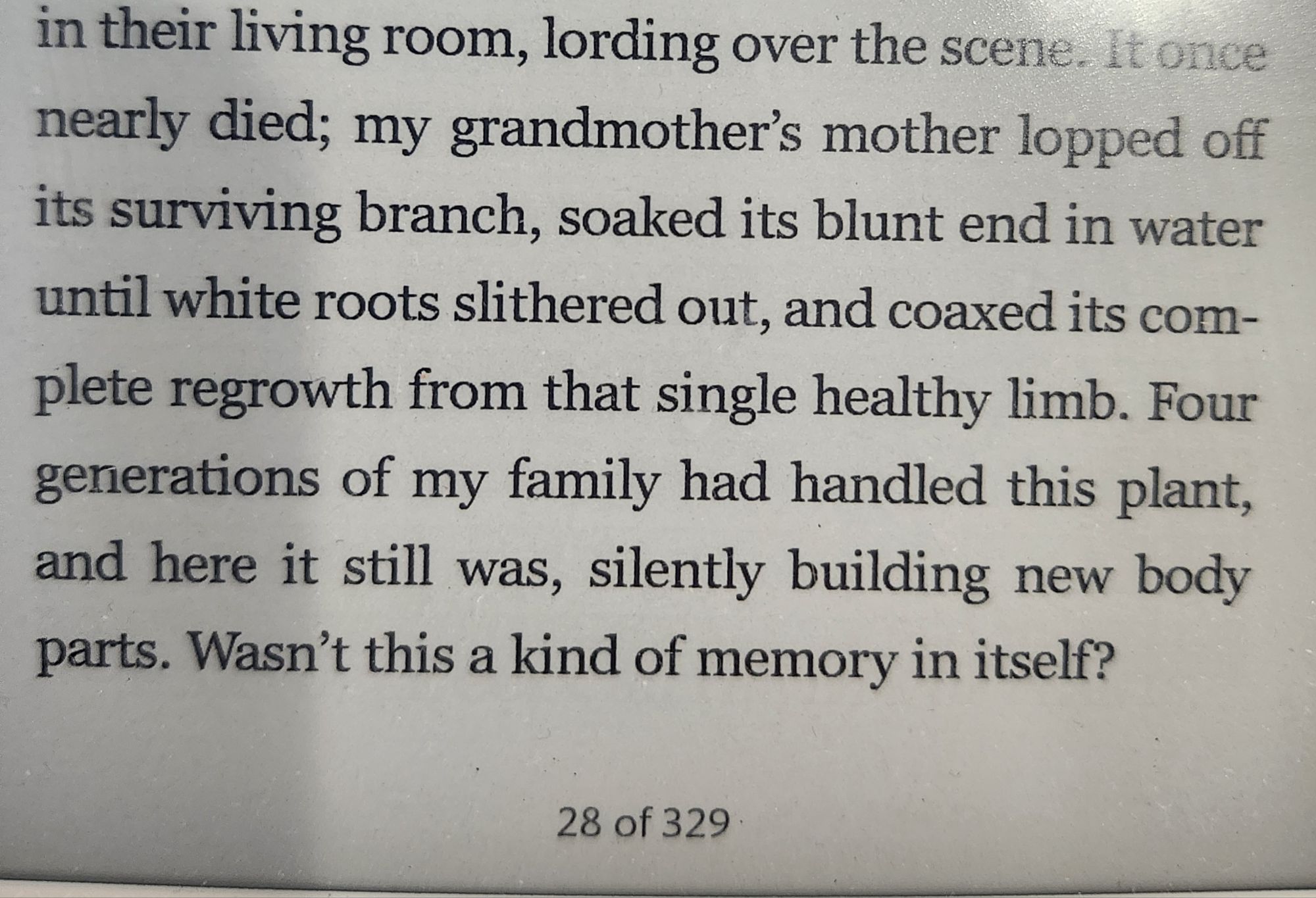
Review: The Light Eaters by Zoe Schlanger

The Light Eaters by Zoe Schlanger

Published: May 7, 2024 by Harper

Buy this book at: Amazon / Barnes & Noble / Kobo

Synopsis:

Award-winning environment and science reporter Zoë Schlanger delivers a groundbreaking work of popular science that probes the hidden world of the plant kingdom and reveals the astonishing capabilities of the green life all around us. It takes tremendous biological creativity to be a plant. To survive and thrive while rooted in a single spot, plants have adapted ingenious methods of survival. In recent years, scientists have learned about their ability to communicate, recognize their kin and behave socially, hear sounds, morph their bodies to blend into their surroundings, store useful memories that inform their life cycle, and trick animals into behaving to their benefit, to name just a few remarkable talents.

The Light Eaters is a deep immersion into the drama of green life and the complexity of this wild and awe-inspiring world that challenges our very understanding of agency, consciousness, and intelligence. In looking closely, we see that plants, rather than imitate human intelligence, have perhaps formed a parallel system. What is intelligent life if not a vine that grows leaves to blend into the shrub on which it climbs, a flower that shapes its bloom to fit exactly the beak of its pollinator, a pea seedling that can hear water flowing and make its way toward it? Zoë Schlanger takes us across the globe, digging into her own memories and into the soil with the scientists who have spent their waking days studying these amazing entities up close.

What can we learn about life on Earth from the living things that thrive, adapt, consume, and accommodate simultaneously? More important, what do we owe these life forms once we come to understand their rich and varied abilities? Examining the latest epiphanies in botanical research, Schlanger spotlights the intellectual struggles among the researchers conceiving a wholly new view of their subject, offering a glimpse of a field in turmoil as plant scientists debate the tenets of ongoing discoveries and how they influence our understanding of what a plant is.

We need plants to survive. But what do they need us for—if at all? An eye-opening and informative look at the ecosystem we live in, this book challenges us to rethink the role of plants—and our own place—in the natural world.

Rating:

Review:

I simply cannot say enough good things about this book. It was thought provoking, compelling, evocative, and also easily digestible. The book centers on the author who has spent her career reporting on environmental science and climate change. She was depressed about it. It was causing her to feel an existential dread and pessimism abut the world. So, she started reading botany publications. And she uncovered that the world of botany is booming with amazing discoveries. The botany world is exploding with all the new things that they are learning about plants, and also coping with how (if at all) it should change our overall worldview. This book comes from that starting point.

When I went into this book I didn’t know quite what to expect. A few years ago I read a book about fungi and was astounded at how complex fungi are and how little I knew about them. I feel a similar way after this book about plants. We all know the basics of how plants came into existence. Millions of years ago when the world still existed as basic multicellular organisms floating in a vast ocean, the atmosphere was a toxic blend of chemical that would not support any kind of life. In that environment the first plants found themselves on shore and did the most amazing thing. They inhaled all of the toxic chemicals in the air and excreted oxygen. As more plants emerged from the ocean this slowly started making the air more breathable. By the time the first animal creature crawled out of the ocean, the plants had already been evolving, living, adapting, and reproducing for 125 million years. They were now so vastly different than anything that would evolve later. And animals were perfectly suited to breath the oxygen being excreted by plants and exhaled it as carbon dioxide…which plants could consume and the cycle of life would advance.

This author tried very hard to not use human terminology when referencing what plants could do, but at a certain point…..what’s the use in trying? Words have meaning. We use words to identify things in our environment. So while scientists bristle at using words like “intelligence” or “behavior” with regard to plants, how else do you describe the behaviors that they witness? The book covers in detail the amazing things we’ve learned about plants, and also details the scientific resistance along the way. As Zoe Schlanger says:

“But science’s biggest flaw and biggest virtue is that it almost always mistakes agreement for truth.”

Scientists agree that plants aren’t intelligent and can’t communicate, so that must be the truth. But what else do you call it? When you discover that plants communicate with other plants in the vicinity that a pest has arrived, and the other plants respond by turning on their pest defense systems. What else could that be called if not communication? When plants are growing next to genetically related plants they will grow in ways that share resources equally but when growing next to unrelated plants will compete for the resources. What else could you call that except intelligence?

I have a million things to say about this book and I couldn’t recommend it more. In the end, I came away with this realization: Intelligence and sentience are an inherent part of existing. Every single individual cell that makes up the world shows the ability to recognize itself and other, shows the ability to avoid things that injure them, shows the ability to seek out resources to preserve themselves. I am starting to believe that the entire world is sentient. The entire world is intelligent. All of us, down to a single cell, are connected in ways that have been evolving for hundreds of millions of years. None of us can survive without the others. It is just a fact that humans are very bad at recognizing any kind of intelligence that doesn’t mirror our own. But just because it doesn’t look like something we recognize doesn’t mean it’s not intelligence.

Progress Update Fridays – June 28, 2024

The Light Eaters by Zoe Schlanger

Progress: 199 of 304 pages

Check this book out at: Goodreads

Synopsis:

Award-winning environment and science reporter Zoë Schlanger delivers a groundbreaking work of popular science that probes the hidden world of the plant kingdom and reveals the astonishing capabilities of the green life all around us. It takes tremendous biological creativity to be a plant. To survive and thrive while rooted in a single spot, plants have adapted ingenious methods of survival. In recent years, scientists have learned about their ability to communicate, recognize their kin and behave socially, hear sounds, morph their bodies to blend into their surroundings, store useful memories that inform their life cycle, and trick animals into behaving to their benefit, to name just a few remarkable talents.

The Light Eaters is a deep immersion into the drama of green life and the complexity of this wild and awe-inspiring world that challenges our very understanding of agency, consciousness, and intelligence. In looking closely, we see that plants, rather than imitate human intelligence, have perhaps formed a parallel system. What is intelligent life if not a vine that grows leaves to blend into the shrub on which it climbs, a flower that shapes its bloom to fit exactly the beak of its pollinator, a pea seedling that can hear water flowing and make its way toward it? Zoë Schlanger takes us across the globe, digging into her own memories and into the soil with the scientists who have spent their waking days studying these amazing entities up close.

What can we learn about life on Earth from the living things that thrive, adapt, consume, and accommodate simultaneously? More important, what do we owe these life forms once we come to understand their rich and varied abilities? Examining the latest epiphanies in botanical research, Schlanger spotlights the intellectual struggles among the researchers conceiving a wholly new view of their subject, offering a glimpse of a field in turmoil as plant scientists debate the tenets of ongoing discoveries and how they influence our understanding of what a plant is.

We need plants to survive. But what do they need us for—if at all? An eye-opening and informative look at the ecosystem we live in, this book challenges us to rethink the role of plants—and our own place—in the natural world.

How it’s going:

Apparently I did not lose access to this book on my Nook. The library copy is gone, but it remains on my separate device. So that’s a benefit because he wait list is long to get it again. I really am loving this book. It reveals the potential for a much more complex web of life than we ever thought existed. Animals wouldn’t exist without plants, humans wouldn’t either. Prior to plants making their way out of the ocean the atmosphere was toxic to anything living. It was plants inhaling all those toxic chemicals and exhaling oxygen that made the atmosphere habitable. Without plants we never would have left the ocean. We couldn’t have. And so human evolution has been intrinsically intertwined with plan evolution ever since. But we are also just beginning to understand all the amazing things that plants can do. Right now I’m reading about a vine in the rainforest of Chile that can alter its leaves to camouflage itself and resemble the plant that it is growing next to. At first they thought that the vine was genetically recognizing the other plant’s structure through bacteria exchange. But then they found that this plant could mimic the leaves of plastic plants…so there would be no bacteria to exchange. So, how does it do it? Scientists still have no idea. They have a few theories but they don’t actually know. Maybe someday we will.

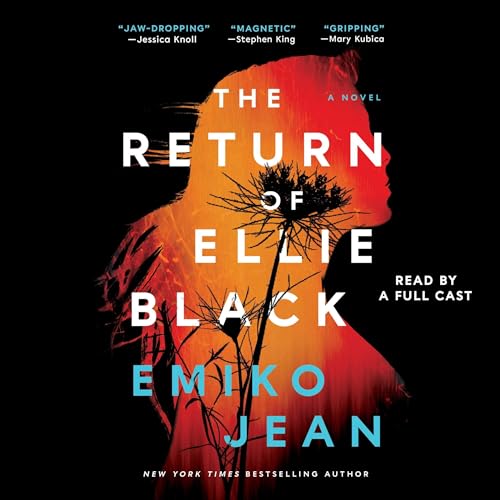
The Return of Ellie Black by Emiko Jean

Progress: 60% of 10 hours

Check this book out at: Goodreads

Synopsis:

Detective Chelsey Calhoun’s life is turned upside down when she gets the call Ellie Black, a girl who disappeared years earlier, has resurfaced in the woods of Washington state—but Ellie’s reappearance leaves Chelsey with more questions than answers.

It’s been twenty years since Detective Chelsey Calhoun’s sister vanished when they were teenagers, and ever since she’s been searching: for signs, for closure, for other missing girls. But happy endings are rare in Chelsey’s line of work.

Then a glimmer: local teenager Ellie Black, who disappeared without a trace two years earlier, has been found alive in the woods of Washington State.

But something is not right with Ellie. She won’t say where she’s been, or who she’s protecting, and it’s up to Chelsey to find the answers. She needs to get to the bottom of what happened to Ellie: for herself, and for the memory of her sister, but mostly for the next girl who could be taken—and who, unlike Ellie, might never return.

The debut thriller from New York Times bestselling author Emiko Jean, The Return of Ellie Black is both a feminist tour de force about the embers of hope that burn in the aftermath of tragedy and a twisty page-turner that will shock and surprise you right up until the final page.

How it’s going:

This is my audiobook for the week. So far it’s been very good. It has a slower plot than a lot of thrillers, which I like. I’m also enjoying the full cast of voices for the audiobook, it helps keep the different narrators straight. This book seems to be slowly leading me to the conclusion and engrossing me in the characters on our journey. It’s a character study almost. And a societal commentary also. This book isn’t just about Ellie Black, it’s about how society treats and views missing and kidnapped girls and women. I am enjoying this journey very much so far.

Progress Update Friday – June 21, 2024

The Light Eaters by Zoe Schlanger

Published: May 7, 2024 by Harper

Progress: 37 of 304 pages

Check this book out at: Goodreads

How it’s going:

This book comes to us from an author who used to be a reporter, her main focus was on reporting about climate change. In her despondence about the state of the world she turned to botany and found that a lot of scientists had been making extraordinary discoveries about plants. For example that plants can recognize other plants that are related to them and won’t block the related plants from receiving sunshine or water, but will block plants that are not related. How they do that? We have no idea, but they do. And so, in her fascination, she started talking to be people about plants and wrote this book.

So far this book is utterly entrancing. I have seen a lot of review criticize the author for anthropomorphizing plants. And I understand their disagreement with it. But, at the same time, how exactly do you talk about the things plants do that defy our language to define it any other way? And we cant forget that historically humans are very bad at recognizing any “intelligence” that isn’t our own. Unfortunately, my time limit on this one from the library is nearly over, I will have to put it on hold again and finish it the next time.

My Darling Girl by Jennifer McMahon

Published: October 2, 2023 by Gallery

Progress: 60%

Check this book out at: Goodreads

How it’s going:

This is my first time reading a book from this author, but if this book sticks the landing it certainly won’t be the last. The premise of this book is that our protagonist escaped a horribly abusive childhood. Her mother was a complete monster, and her father committed suicide and wasn’t around to protect the children. She escapes, gets married and has two children of her own and then her mother calls. Her mother has cancer, and with her last weeks to live she wants to move into the protagonist’s home and “make amends”. But soon strange things begin happening and our protagonist starts to wonder if perhaps her mother is possessed by a demon.

I am listening to this one on audiobook and the narrator is remarkable. Her tonal shifts with each character are subtle, but they perfectly set the mood. The story is delightfully creepy. Our protagonist is just starting to put the pieces together and I am anxious to see how it ends.

Library Haul – May 9, 2024

Mal Goes to War by Edward Ashton

Published: April 9, 2024 by St. Martin’s Press

Check this book out at: Goodreads

Synopsis:

The humans are fighting again. Go figure.

As a free A.I., Mal finds the war between the modded and augmented Federals and the puritanical Humanists about as interesting as a battle between rival anthills. He’s not above scouting the battlefield for salvage, though, and when the Humanists abruptly cut off access to infospace he finds himself trapped in the body of a cyborg mercenary, and responsible for the safety of the modded girl she died protecting.

A dark comedy wrapped in a techno thriller’s skin, Mal Goes to War provides a satirical take on war, artificial intelligence, and what it really means to be human.

What caught my attention: The cover of this one drew my eye from across the library. When I read the cover summary I was hooked. An artificial intelligence who ends up embroiled in a conflict that he takes no interest in, protecting someone that he has no allegiance to. That’s an interesting idea. And I am interested to see what kind of commentary this book gives on war.

Snowglobe by Soyoung Park

Published: February 27, 2024 by Delacourte Press

Check this book out at: Goodreads

Synopsis:

In a world of constant winter, only the citizens of the climate-controlled city of Snowglobe can escape the bitter cold—but this perfect society is hiding dark and dangerous secrets within its frozen heart.

Enclosed under a vast dome, Snowglobe is the last place on Earth that’s warm. Outside Snowglobe is a frozen wasteland, and every day, citizens face the icy world to get to their jobs at the power plant, where they produce the energy Snowglobe needs. Their only solace comes in the form of twenty-four-hour television programming streamed directly from the domed city.

The residents of Snowglobe have fame, fortune, and above all, safety from the desolation outside their walls. In exchange, their lives are broadcast to the less fortunate outside, who watch eagerly, hoping for the chance to one day become actors themselves.

Chobahm lives for the time she spends watching the shows produced inside Snowglobe. Her favorite? Goh Around, starring Goh Haeri, Snowglobe’s biggest star—and, it turns out, the key to getting Chobahm her dream life.

Because Haeri is dead, and Chobahm has been chosen to take her place. Only, life inside Snowglobe is nothing like what you see on television. Reality is a lie, and truth seems to be forever out of reach.

What drew my attention: The first thing that I noticed about this book was the cover. It is breathtakingly beautiful. I have also been hearing about this book quite often over the past few months. I have heard it compared to the Korean Hunger Games. So that piqued my interest. I was very excited to see it at my library. Honestly, if the world was this desolate, wouldn’t you trade your privacy for warmth and safety? I probably would.

How Far the Light Reaches: A Life in Ten Sea Creatures by Sabrina Imbler

Published: December 6, 2022 by Little, Brown and Company

Check this book out at: Goodreads

Synopsis:

A queer, mixed race writer working in a largely white, male field, science and conservation journalist Sabrina Imbler has always been drawn to the mystery of life in the sea, and particularly to creatures living in hostile or remote environments. Each essay in their debut collection profiles one such creature: the mother octopus who starves herself while watching over her eggs, the Chinese sturgeon whose migration route has been decimated by pollution and dams, the bizarre Bobbitt worm (named after Lorena), and other uncanny creatures lurking in the deep ocean, far below where the light reaches. Imbler discovers that some of the most radical models of family, community, and care can be found in the sea, from gelatinous chains that are both individual organisms and colonies of clones to deep-sea crabs that have no need for the sun, nourished instead by the chemicals and heat throbbing from the core of the Earth. Exploring themes of adaptation, survival, sexuality, and care, and weaving the wonders of marine biology with stories of their own family, relationships, and coming of age, How Far the Light Reaches is a book that invites us to envision wilder, grander, and more abundant possibilities for the way we live.

What drew my attention: My local library has a shelf titled “Great nonfiction that you may have missed”. I always give it a look to see if something catches my eye. The first thing that caught my eye with this book was the sturgeon on the front cover. I love the ocean. I love the creatures who live in the ocean. So, to find a book with a particular theme on 10 sea creatures that can teach us valuable lessons in life, is a fascinating idea. I hope it turns out as fascinating as it sounds.

Review: Meg by Steve Alten

meg Meg by Steve Alten

Published June 2nd 1997 by DoubleDay

Buy this book at B&N / Amazon / Book Depository


Synopsis:

On a top-secret dive into the Pacific Ocean’s deepest canyon, Jonas Taylor found himself face-to-face with the largest and most ferocious predator in the history of the animal kingdom. The sole survivor of the mission, Taylor is haunted by what he’s sure he saw but still can’t prove exists – Carcharodon megalodon, the massive mother of the great white shark. The average prehistoric Meg weighs in at twenty tons and could tear apart a Tyrannosaurus rex in seconds. Taylor spends years theorizing, lecturing, and writing about the possibility that Meg still feeds at the deepest levels of the sea. But it takes an old friend in need to get him to return to the water, and a hotshot female submarine pilot to dare him back into a high-tech miniature sub. Diving deeper than he ever has before, Taylor will face terror like he’s never imagined. MEG is about to surface. When she does, nothing and no one is going to be safe, and Jonas must face his greatest fear once again.


Rating: 4 star


Review:

God how I loved this book, I loved it like a fat kid loves ice cream. We have all seen a horror movie that we thought “Oh man, this is just so awful! I love it!” That’s what this book was for me, a made for tv horror movie. But that’s also what made me hesitate to give it four stars. Based on the technical merits of the writing it would probably be a three, based on the story alone maybe a two, but based on how much I absolutely adored it a five would be appropriate. So in the end a 3.5 to 4 seems most fair.

Let’s get a few things straight about this book right up front. The writing is not very inventive or clever. I counted at least 3 times that the word “entrails” was used in every single scene where the shark eats something or someone. It was a bit repetitive and not very thrilling. The plot is also highly outlandish. You might just have to turn off your disbelief switch because I don’t think just suspending it will do the trick.

Though the plot was out there, I also thought it was awesome for that exact reason. More than once I just sat there with the book in my lap laughing so hard that I couldn’t see straight as the book slowly slid its way to the floor unnoticed. I couldn’t put it down because I wanted to see what outrageous thing would happen next. It was fabulous! And the ending…oh my God the ending! Give me a minute, the giggles came back. *deep breath* Okay, I’m good now. The ending was quite possibly the silliest and most amazing thing I have ever read. I cannot even fathom how such an ending came into being. I refuse to say anything else about it because it would ruin the amazingness.

Now let’s ponder for a moment on Mr. Alten’s  theory of how the Megalodon survived the mass extinction of the dinosaurs. The book proposes that the Meg’s prey were driven to the depths of the ocean by the Ice Age and given that they are warm blooded the Meg followed and then stayed there because that’s were the prey was. And by the time they had any need or desire to return to the surface they were trapped by the colder water temperatures and so have stayed in the depths for millions of years. It’s an interesting theory but it ignores several key facts about the closest living relative of the Megalodon, the Great White shark. The White is also warm blooded, and it prefers colder waters. The White is most concentrated in areas such as northern California, off the coast of Massachusetts, the southern tip of Africa. Yes they can and do inhabit warmer waters as well, but the colder water is seemingly preferred. Since the Megalodon is considered a cousin to the White shark, why would that species be much different? There is no logical reason that the Meg would have been “trapped” by the cold layer of water between the depths and the surface. It made for an interesting theory for a book, but doesn’t make much logical sense. *blush* I’m sorry, is my nerd showing?

ENTRAILS!  Now that you’re all distracted let’s move on to characters. They were all typical of this kind of horror book, nothing new or earthshattering. I did think the love interest seemed really forced. I mean, it wasn’t necessary so why not just leave it out? Instead I was caught feeling…wait a second they were wishing death on each other not two chapters ago and now they’re planning a romantic trip for when they survive this? That was kind of weird.

This book had a nice set up for a sequel, which I do intend on reading. I recommend this book if you want to read a book that is as silly as it is tropey, but still completely awesome. I know I loved it.