New ARCs!!

It’s been a minute since I updated the advanced copies I have received through various sources. Time for an update on what I will be reading in the future.

Witches: A Compendium by Judika Illes

Expected publication: October 7, 2024 by Weiser Books

Check this book out at: Goodreads

Synopsis:

A compendium of witches through the ages, from earliest prehistory to some of the most significant modern practitioners, Witches explores who and what is a witch. Ranging from such famed historical figures as Marie Laveau, Tituba, Sybil Leek, Isobel Gowdie, and Countess Erzsebet Báthory (popularly known as the Blood Countess) to popular literary and cinematic figures such as Endora, the Scarlet Witch, Storm, and the Wicked Witch of the West, Illes offers a complete range of the history of witches.   Also included are the sacred (Baba Yaga, Lilith, Isis, Hekate, Diana, Aradia, Circe) and the profane (the Salem Witch trials and the Burning Times), plus travel tips for witches and a guide to the tools of the trade. Witches is appropriate for readers of all ages and serves as an excellent and entertaining introduction for those fascinated by the topic.   Previously published in 2010 by Weiser Books as A Weiser Field Guide to Witches, this book has been updated for new witches as well as a new era.

Tilt by Emma Pattee

Expected publication: March 4, 2025 by Simon & Schuster

Check this book out at: Goodreads

Synopsis:

Set over the course of one day, a heart-racing debut about a woman facing the unimaginable, determined to find safety.

Last night, you and I were safe. Last night, in another universe, your father and I stood fighting in the kitchen.

Annie is nine months pregnant and shopping for a crib at IKEA when a massive earthquake hits Portland, Oregon. With no way to reach her husband, no phone or money, and a city left in chaos, there’s nothing to do but walk.

Making her way across the wreckage of Portland, Annie experiences human desperation and strangers offering help, a riot at a grocery store, and an unlikely friendship with a young mother. As she walks, Annie reflects on her struggling marriage, her disappointing career, and her anxiety about having a baby. If she can just make it home, she’s determined to change her life.

A propulsive debut, Tilt is a primal scream of a novel about the disappointments and desires we all carry, and what each of us will do for the people we love.

The University of Arizona: A History in 100 Stories by Gregory McNamee

Expected publication: October 15, 2024 by Sentinel Peak Books

Check this book out at: Goodreads

Synopsis:

The University of Arizona: A History in 100 Stories is a celebration of the people, ideas, inventions, teaching, and structures that have been part of the school’s evolution from a small land-grant institution to an internationally renowned research institution. Drawing on half a century of connection with the University of Arizona as a student, staff member, and faculty member, Gregory McNamee presents a history through the lens of a hundred subjects.

That story begins in 1885, with the establishment of the school, which quickly proved itself to be a powerhouse in its foundational “four pillars”: agriculture and earth sciences, followed by astronomy and anthropology. In the years following World War II, those four pillars became ever more important to the University, even as countless other fields of study gained prominence: optical sciences, women’s studies, the humanities, mathematics, and more. This phenomenal institution has as its setting the Sonoran Desert, and, closer to home, to a built environment that is widely considered among the most scenic in the country, from the Historic District with its buildings that are more than a century old to the latest steel-and-glass constructions on the edges of the ever-expanding campus.

McNamee relates this history in an entertaining manner, peppering discussion of serious intellectual and institutional themes with lighter moments—the origins of the university’s rivalry with Arizona State, the ghosts that are said to lurk about campus, and more. Wildcats everywhere will delight in McNamee’s celebration of the people, places, learning, books, and pastimes that have distinguished our school.

Spark of the Everflame by Penn Cole

Expected publication: October 8, 2024 by Atria Books

Check this book out at: Goodreads

Synopsis:

When old secrets catch fire, everything will burn.

In a mortal world colonized by the gods and ruled over by the Descended, their cruel offspring, Diem Bellator yearns to escape the insular life of her poor village.

Her mother’s sudden disappearance—and the discovery of a dangerous secret about her past—offer Diem an unexpected opportunity to enter the dark world of Descended royalty and unlock the web of mysteries her mother left behind.

With the dying King’s handsome, mysterious heir watching her every move, and a ruthless mortal alliance recruiting her to join the growing civil war, Diem will have to navigate the unwritten rules of love, power, and politics in order to save her family—and all of mortalkind.

The Black Hunger by Nicholas Pullen

Expected publication: October 8, 2024 by Orbit

Check this book out at: Goodreads

Synopsis:

John Sackville will soon be dead. Shadows writhe in the corners of his cell as he mourns the death of his secret lover and the gnawing hunger inside him grows impossible to ignore.

He must write his last testament before it is too late.

It is a story steeped in history and myth – a journey from stone circles in Scotland, to the barren wilderness of Ukraine where otherworldly creatures stalk the night, ending in the icy peaks of Tibet and Mongolia, where an ancient evil stirs . .

Upcoming Releases – July 28, 2024

The Bane Witch by Ava Morgyn

Expected publication: March 18, 2024 by St. Martin’s Griffin

Check this book out at: Goodreads

Synopsis:

Practical Magic meets Gone Girl in Ava Morgyn’s next dark, spellbinding novel about a woman who is more than a witch – she’s a hunter.Piers Corbin has always had an affinity for poisonous things – plants and men. From the pokeweed berries she consumed at age five that led to the accidental death of a stranger, to the husband whose dark proclivities have become… concerning, poison has been at the heart of her story. But when she fakes her own death in an attempt to escape her volatile marriage and goes to stay with her estranged great aunt in the mountains, she realizes her predilection is more than a hunger – it’s a birthright. Piers comes from a long line of poison eaters – Bane Witches – women who ingest deadly plants and use their magic to rid the world of evil men. Piers sets out to earn her place in her family’s gritty but distinguished legacy, all while working at her Aunt Myrtle’s cafe and perpetuating a flirtation with the local, well-meaning sheriff to allay his suspicions on the body count she’s been leaving in her wake. But soon she catches the attention of someone else, a serial killer operating in the area. And that only means one thing – it’s time to feed. In Ava Morgyn’s dark, thrilling novel, The Bane Witch, a very little poison can do a world of good.

Why this caught my eye:

Normally I hate writeups that hype a book as “X meets Y!!”. It is almost never accurate and I find it annoying. If I wanted to read thing X, then I would. But, I am here for this one. Practical Magic…yes! Gone Girl…yes! I am bought and sold on this one.

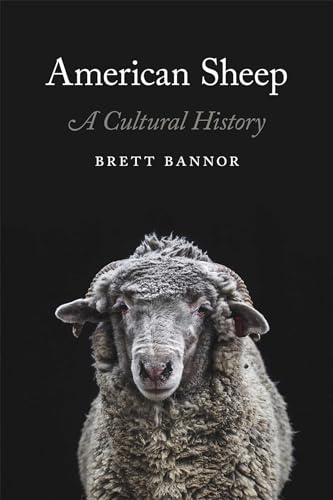
American Sheep by Brett Bannor

Expected publication: October 1, 2024 by University of Georgia Press

Check this book out at: Goodreads

Synopsis:

American Sheep introduces the “remarkable story” of how sheep helped shape American history from the colonial era through the early twentieth century. By introducing the readers to a cast of characters—some forgotten and some famous—whose lives intersected with sheep, the book illuminates the roles the animals played in the “growth and development of the United States.” John Brown’s relationship with sheep, for example, reveals how “sheep culture influenced racial relations.” And John Muir’s fears about sheep grazing in Yosemite were central to the development of the environmental movement his name is most often attached to. American Sheep, in other words, is a book that shears away our misunderstandings of the past and weaves sheep into the fabric of American economic and social history.

Why it caught my eye:

I don’t think I’ve talked about this much on the site, but another one of my hobbies is fiber art. I love wool. I love sheep. I spin my own yarn. I dye my own wool. I knit and crochet with my own spun yarn. I am friends with shepherds, and I own some of their fleeces and know their name, how old they were, who their parents are, and what kind of year they had based on the wool they produced (you can tell if they were sick, or if it was particularly hot, or particularly wet, etc). This book detailing how important sheep have been to the United States’ cultural history, yes please!

What the Woods Took by Courtney Gould

Expected publication: December 10, 2024 by Wednesday Books

Check this book out at: Goodreads

Synopsis:

Devin Green wakes in the middle of the night to find two men in her bedroom. No stranger to a fight, she calls to her foster parents for help, but it soon becomes clear this is a planned abduction—one everyone but Devin signed up for. She’s shoved in a van and driven deep into the Idaho woods, where she’s dropped off with a cohort of equally confused teens. Finally, two camp counselors inform them that they’ve all been enrolled in an experimental therapy program. If the campers can learn to change their self-destructive ways—and survive a fifty-days hike through the wilderness—they’ll come out the other side as better versions of themselves. Or so the counselors say.

Devin is immediately determined to escape. She’s also determined to ignore Sheridan, the cruel-mouthed, lavender-haired bully who mocks every group exercise. But there’s something strange about these woods—inhuman faces appearing between the trees, visions of people who shouldn’t be there flashing in the leaves—and when the campers wake up to find both counselors missing, therapy becomes the least of their problems. Stranded and left to fend for themselves, the teens quickly realize they’ll have to trust each other if they want to survive. But what lies in the woods may not be as dangerous as what the campers are hiding from each other—and if the monsters have their way, no one will leave the woods alive.

Why this caught my eye:

Troubled teen wilderness “therapy” is having a moment in the spotlight, rightly so in my opinion. The idea of taking a circumstance that is already morally and ethically questionable and adding a horror element with monsters is a great idea. Fun fact, I got sent to a church version of one of those type things when I was a teenager. It was not as bad as many others, but sending a bunch of teenagers to go hiking around the woods for miles a day with untrained adults is not therapeutic, and I can’t believe that people would actually do that to their child. But this book still peaks my interest.

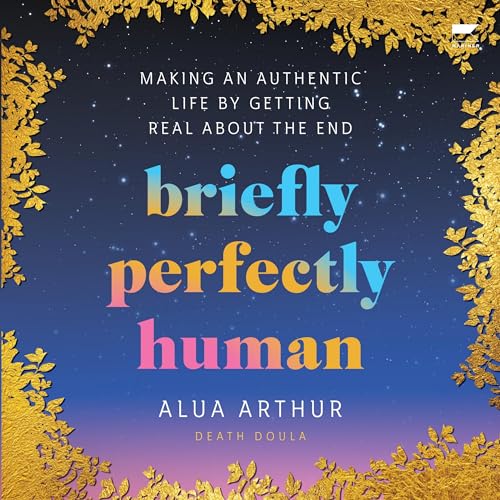
Audiobook review: Briefly Perfectly Human by Alua Arthur

Briefly Perfectly Human by Alua Arthur

Narrated by: Alua Arthur

Published: April 16, 2024 by Blackstone Publishing

Buy this audiobook at: Audible / Kobo

Synopsis:

For her clients and everyone who has been inspired by her humanity, Alua Arthur is a friend at the end of the world. As our country’s leading death doula, she’s spreading a transformative message: thinking about your death—whether imminent or not—will breathe wild, new potential into your life.

Warm, generous, and funny AF, Alua supports and helps manage end-of-life care on many levels. The business matters, medical directives, memorial planning; but also honoring the quiet moments, when monitors are beeping and loved ones have stepped out to get some air—or maybe not shown up at all—and her clients become deeply contemplative and want to talk. Aching, unfinished business often emerges. Alua has been present for thousands of these sacred moments—when regrets, fears, secret joys, hidden affairs, and dim realities are finally said aloud. When this happens, Alua focuses her attention at the pulsing center of her clients’ anguish and creates space for them, and sometimes their loved ones, to find peace.

This has had a profound effect on Alua, who was already no stranger to death’s periphery. Her family fled a murderous coup d’état in Ghana in the 1980s. She has suffered major, debilitating depressions. And her dear friend and brother-in-law died of lymphoma. Advocating for him in his final months is what led Alua to her life’s calling. She knows firsthand the power of bearing witness and telling the truth about life’s painful complexities, because they do not disappear when you look the other way. They wait for you.

Briefly Perfectly Human is a life-changing, soul-gathering debut, by a writer whose empathy, tenderness, and wisdom shimmers on the page. Alua Arthur combines intimate storytelling with a passionate appeal for loving, courageous end-of-life care—what she calls “death embrace.” Hers is a powerful testament to getting in touch with something deeper in our lives, by embracing the fact of our own mortality. “Hold that truth in your mind,” Alua says, “and wondrous things will begin to grow around it.”

Rating:

Review: **Spoiler alert** Since this is a memoir style book, I cant give an adequate review without talking intricately about the plot. Therefore, the review will likely spoil portions of the book.

This book is one of those times that I feel like the synopsis sold me a completely different book than the book I received. What I expected was a memoir that had a heavy focus on what she had learned in her work with the dying and lessons that she had hoped to pass on. But that isn’t the book I read. Alua’s work as a death doula isn’t really covered until the very end of the book and almost none of it was in any sufficient detail to take away a lesson from it. Most of the stories were about how the client’s situation impacted her. Which, as a doula, is not supposed to be the focus. Hopefully this is just because it is her perspective of the story and she comes across to her clients as centered on them and their needs.

I’m also not sure it was the right decision for the author to narrate the book herself. Audiobook narration is a specific skillset and not everyone has it, not everyone is able to convey the story accurately and truthfully while also making it compelling for the listener. That is where this one failed. This work is supposed to be Alua’s passion. Her life mission. But I heard none of that passion in her narration. Her tone was quite monotone and slow, which made it easy for me to tune out and stop paying attention because it didn’t compel my attention.

A large portion of this book is also devoted to Alua’s experience as a black Ghanaian woman. Naturally this made race and racism a big theme in the book. But in some of the circumstances it was difficult to have sympathy for her. For example, when she arrives at a client’s home and is told by the client’s sons that “Sorry, we should have told you that our dad is a little racist”. Now, there is no excuse for the sons actions. They knew damn well that Alua was a black woman. They knew full well that their dad was a racist. So it was entirely abhorrent that they tried to hire her at all. If she had rejected the job and gone back home every single person reading would have cheered. But she decided to stay. Only to help the sons, not interact with their dad. They agreed. And then they pushed her to help their dad. Again, abhorrent behavior on their part. Every single person reading would have supported her in walking away immediately and going home. No one should subject themselves to racism and hatred directed at them. Never for a moment.

But again, she decides to stay and interact with the father and participate in his care. A decision that I thought displayed a level of empathy and compassion that I could never understand. Then, as she is sitting at this dying man’s bedside she is privately thinking about how she wishes that he is suffering, wishes that they wouldn’t give him pain medication so that he would die miserable. Relishing the idea that he would die with his last image being a black woman. My eyebrows raised almost off my head. Clearly she was unable to provide the client compassionate or empathetic care. She could not remain neutral. And I don’t blame her, I doubt anyone could. And they shouldn’t have to, let me be clear. But she had numerous opportunities to remove herself from the abhorrent situation and decline to work with them. She chose not to and then told us the story of wishing this dying man would be in more pain. That is gross. If she couldn’t give the family the same service she gives others then she shouldn’t have been there. Then she sums it up with it being “another situation where I diminished myself as a black woman for the comfort of white folks.” I feel like that was the wrong lesson. The real lesson should have been that she needed to advocate for herself as hard and passionately as she advocates for her clients.

Often time the stories that the author tells focus on her efforts to help the dying client “die with grace”. While this is a nice ideal, it often isn’t a reality. And it seems like an unreasonable burden to put on a dying person, to have grace. It feels like the expectation is performative. Die with grace so that all of your family can have a nice experience. I didn’t like it. It made me feel uncomfortable.

Overall, I don’t think this book was for me. I was expecting something completely different and I didn’t enjoy what I got.

Upcoming Releases – July 14, 2024

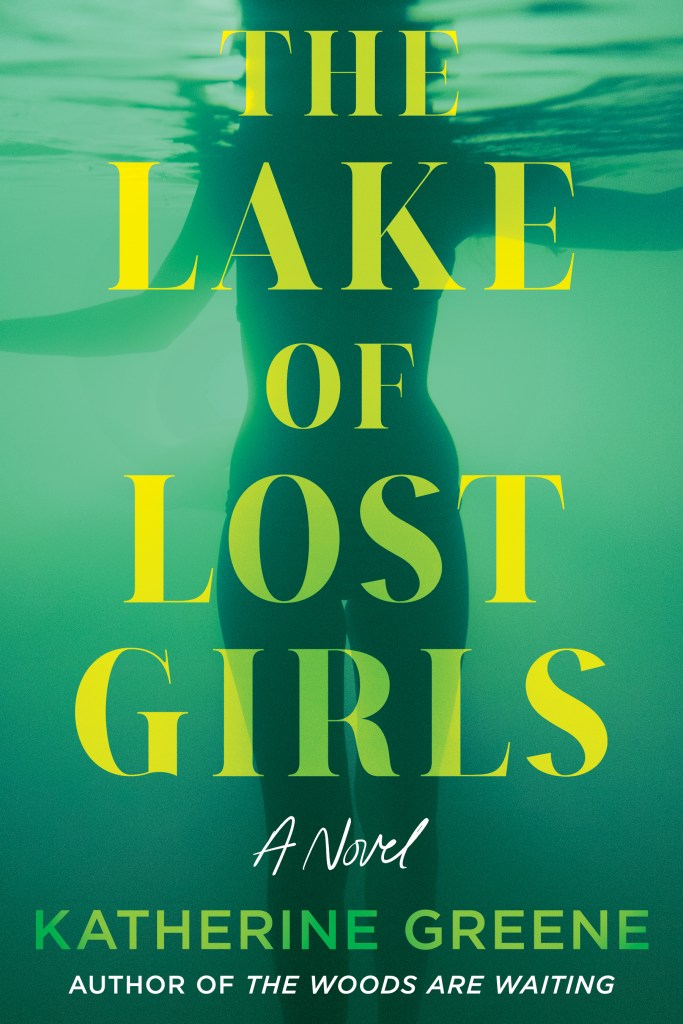
The Lake of Lost Girls by Katherine Greene

Expected publication: November 5, 2024 by Crooked Lane Books

Check this book out at: Goodreads

Synopsis:

It’s 1998, and female students are going missing at Southern State University in North Carolina. But freshman Jessica Fadley, once a bright and responsible student, is going through her own struggles. Just as her life seems to be careening dangerously out of control, she suddenly disappears.

Twenty-four years later, Jessica’s sister Lindsey is desperately searching for answers and uses the momentum of a new chart-topping true crime podcast, Ten Seconds to Vanish, that focuses on the cold cases, to guide her own investigation. Soon, interest reaches fever pitch when the bodies of the long-missing women begin turning up at a local lake, which leads Lindsey down a disturbing road of discovery.

In the present, one sister seeks to untangle a complicated web of lies.
In the past, the other descends ever deeper into a darkness that will lead to her ultimate fate.

This propulsive and chilling suspense is a sharp examination of sisterhood and the culture of true crime.

What caught my eye: I’m a big fan of crime mystery books, and I am also a big fan of true crime podcasts. This story says that it uses the medium of a true crime podcast to introduce us to the mystery. I love that idea.

The Courting of Bristol Keats by Mary E. Pearson

Expected publication: November 12, 2024 by Flatiron Books

Check this book out at: Goodreads

Synopsis:

From NEW YORK TIMES bestselling author Mary E. Pearson comes a thrilling romantic fantasy full of dangerous fae, dark secrets, and addictive romance

After losing both their parents, Bristol Keats and her sisters struggle to stay afloat in their small, quiet town of Bowskeep. When Bristol begins to receive letters from an “aunt” she’s never heard of who promises she can help, she reluctantly agrees to meet—and discovers that everything she thought she knew about her family is a lie. Even her father might still be alive, not killed but kidnapped by terrifying creatures to a whole other realm—the one he is from.

Desperate to save her father and find the truth, Bristol journeys to a land of gods and fae and monsters. Pulled into a dangerous world of magic and intrigue, she makes a deadly bargain with the fae king, Tyghan. But what she doesn’t know is that he’s the one who drove her parents to live a life on the run. And he is just as determined as she is to find her father—dead or alive.

Why it caught my attention: I can never refuse a fantasy romance with fae. Many of them are not good, but I can’t refuse them anyway. This one sounds great though with mysteries on all sides.

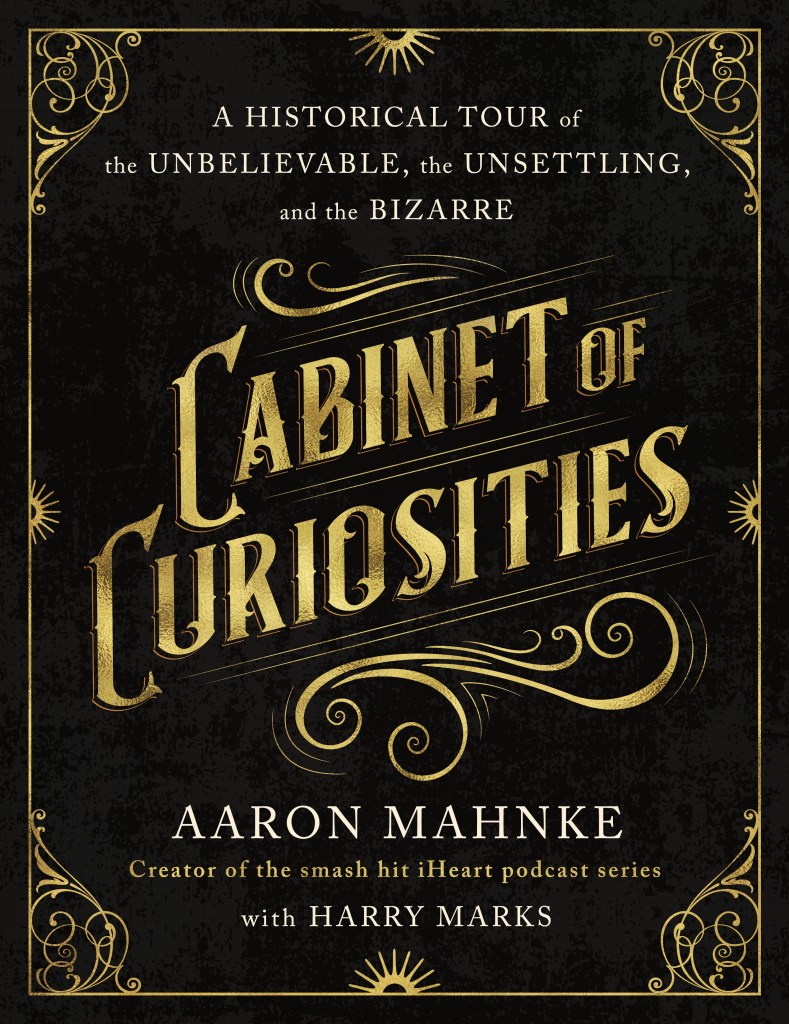
Cabinet of Curiosities by Aaron Mahnke

Expected publication: November 12, 2024 by St. Martin’s Press

Check this book out at: Goodreads

Synopsis:

The new book based on the long-running hit podcast by Aaron Mahnke, which has translated into over 120-million downloads to date, and a monthly average of over 2 million listeners. The podcast, Aaron Mahnke’s Cabinet of Curiosities, has delighted millions of listeners for years with tales of the wonderful, astounding, and downright bizarre people, places, and things throughout history. Now, in Cabinet of Curiosities the book, learn the fascinating story of the invention of the croissant in a country that was not France, and relive the adventures of a dog that stowed away and went to war, only to help capture a German spy. Along the way, readers will pass through the American state of Franklin, watch Abraham Lincoln’s son be rescued by his assassin’s brother, and learn how too many crash landings inspired one pilot to leave the airline industry and trek for the stars. For the first time ever, Aaron has gathered scores of his favorites in print, and curated them into a beautiful, topical collection for devoted followers and new fans alike.

Why it caught my eye: I am a huge fan of the podcasts by Aaron Mahnke (Lore and Cabinet of Curiosities). He is a magnificent storyteller, and I always want to know more about the stories he tells. And soon I will be able to. I’m thrilled!

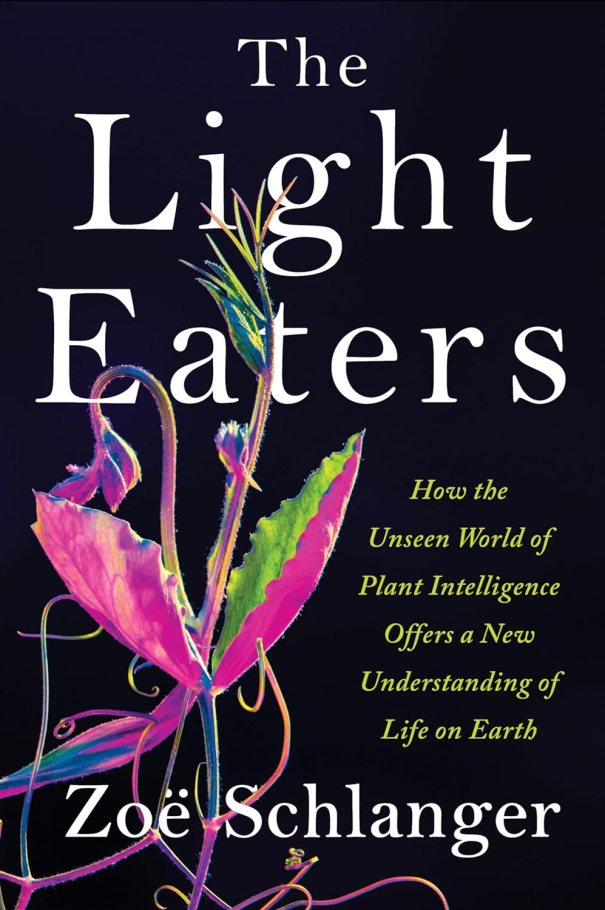
Review: The Light Eaters by Zoe Schlanger

The Light Eaters by Zoe Schlanger

Published: May 7, 2024 by Harper

Buy this book at: Amazon / Barnes & Noble / Kobo

Synopsis:

Award-winning environment and science reporter Zoë Schlanger delivers a groundbreaking work of popular science that probes the hidden world of the plant kingdom and reveals the astonishing capabilities of the green life all around us. It takes tremendous biological creativity to be a plant. To survive and thrive while rooted in a single spot, plants have adapted ingenious methods of survival. In recent years, scientists have learned about their ability to communicate, recognize their kin and behave socially, hear sounds, morph their bodies to blend into their surroundings, store useful memories that inform their life cycle, and trick animals into behaving to their benefit, to name just a few remarkable talents.

The Light Eaters is a deep immersion into the drama of green life and the complexity of this wild and awe-inspiring world that challenges our very understanding of agency, consciousness, and intelligence. In looking closely, we see that plants, rather than imitate human intelligence, have perhaps formed a parallel system. What is intelligent life if not a vine that grows leaves to blend into the shrub on which it climbs, a flower that shapes its bloom to fit exactly the beak of its pollinator, a pea seedling that can hear water flowing and make its way toward it? Zoë Schlanger takes us across the globe, digging into her own memories and into the soil with the scientists who have spent their waking days studying these amazing entities up close.

What can we learn about life on Earth from the living things that thrive, adapt, consume, and accommodate simultaneously? More important, what do we owe these life forms once we come to understand their rich and varied abilities? Examining the latest epiphanies in botanical research, Schlanger spotlights the intellectual struggles among the researchers conceiving a wholly new view of their subject, offering a glimpse of a field in turmoil as plant scientists debate the tenets of ongoing discoveries and how they influence our understanding of what a plant is.

We need plants to survive. But what do they need us for—if at all? An eye-opening and informative look at the ecosystem we live in, this book challenges us to rethink the role of plants—and our own place—in the natural world.

Rating:

Review:

I simply cannot say enough good things about this book. It was thought provoking, compelling, evocative, and also easily digestible. The book centers on the author who has spent her career reporting on environmental science and climate change. She was depressed about it. It was causing her to feel an existential dread and pessimism abut the world. So, she started reading botany publications. And she uncovered that the world of botany is booming with amazing discoveries. The botany world is exploding with all the new things that they are learning about plants, and also coping with how (if at all) it should change our overall worldview. This book comes from that starting point.

When I went into this book I didn’t know quite what to expect. A few years ago I read a book about fungi and was astounded at how complex fungi are and how little I knew about them. I feel a similar way after this book about plants. We all know the basics of how plants came into existence. Millions of years ago when the world still existed as basic multicellular organisms floating in a vast ocean, the atmosphere was a toxic blend of chemical that would not support any kind of life. In that environment the first plants found themselves on shore and did the most amazing thing. They inhaled all of the toxic chemicals in the air and excreted oxygen. As more plants emerged from the ocean this slowly started making the air more breathable. By the time the first animal creature crawled out of the ocean, the plants had already been evolving, living, adapting, and reproducing for 125 million years. They were now so vastly different than anything that would evolve later. And animals were perfectly suited to breath the oxygen being excreted by plants and exhaled it as carbon dioxide…which plants could consume and the cycle of life would advance.

This author tried very hard to not use human terminology when referencing what plants could do, but at a certain point…..what’s the use in trying? Words have meaning. We use words to identify things in our environment. So while scientists bristle at using words like “intelligence” or “behavior” with regard to plants, how else do you describe the behaviors that they witness? The book covers in detail the amazing things we’ve learned about plants, and also details the scientific resistance along the way. As Zoe Schlanger says:

“But science’s biggest flaw and biggest virtue is that it almost always mistakes agreement for truth.”

Scientists agree that plants aren’t intelligent and can’t communicate, so that must be the truth. But what else do you call it? When you discover that plants communicate with other plants in the vicinity that a pest has arrived, and the other plants respond by turning on their pest defense systems. What else could that be called if not communication? When plants are growing next to genetically related plants they will grow in ways that share resources equally but when growing next to unrelated plants will compete for the resources. What else could you call that except intelligence?

I have a million things to say about this book and I couldn’t recommend it more. In the end, I came away with this realization: Intelligence and sentience are an inherent part of existing. Every single individual cell that makes up the world shows the ability to recognize itself and other, shows the ability to avoid things that injure them, shows the ability to seek out resources to preserve themselves. I am starting to believe that the entire world is sentient. The entire world is intelligent. All of us, down to a single cell, are connected in ways that have been evolving for hundreds of millions of years. None of us can survive without the others. It is just a fact that humans are very bad at recognizing any kind of intelligence that doesn’t mirror our own. But just because it doesn’t look like something we recognize doesn’t mean it’s not intelligence.

Progress Update Fridays – June 28, 2024

The Light Eaters by Zoe Schlanger

Progress: 199 of 304 pages

Check this book out at: Goodreads

Synopsis:

Award-winning environment and science reporter Zoë Schlanger delivers a groundbreaking work of popular science that probes the hidden world of the plant kingdom and reveals the astonishing capabilities of the green life all around us. It takes tremendous biological creativity to be a plant. To survive and thrive while rooted in a single spot, plants have adapted ingenious methods of survival. In recent years, scientists have learned about their ability to communicate, recognize their kin and behave socially, hear sounds, morph their bodies to blend into their surroundings, store useful memories that inform their life cycle, and trick animals into behaving to their benefit, to name just a few remarkable talents.

The Light Eaters is a deep immersion into the drama of green life and the complexity of this wild and awe-inspiring world that challenges our very understanding of agency, consciousness, and intelligence. In looking closely, we see that plants, rather than imitate human intelligence, have perhaps formed a parallel system. What is intelligent life if not a vine that grows leaves to blend into the shrub on which it climbs, a flower that shapes its bloom to fit exactly the beak of its pollinator, a pea seedling that can hear water flowing and make its way toward it? Zoë Schlanger takes us across the globe, digging into her own memories and into the soil with the scientists who have spent their waking days studying these amazing entities up close.

What can we learn about life on Earth from the living things that thrive, adapt, consume, and accommodate simultaneously? More important, what do we owe these life forms once we come to understand their rich and varied abilities? Examining the latest epiphanies in botanical research, Schlanger spotlights the intellectual struggles among the researchers conceiving a wholly new view of their subject, offering a glimpse of a field in turmoil as plant scientists debate the tenets of ongoing discoveries and how they influence our understanding of what a plant is.

We need plants to survive. But what do they need us for—if at all? An eye-opening and informative look at the ecosystem we live in, this book challenges us to rethink the role of plants—and our own place—in the natural world.

How it’s going:

Apparently I did not lose access to this book on my Nook. The library copy is gone, but it remains on my separate device. So that’s a benefit because he wait list is long to get it again. I really am loving this book. It reveals the potential for a much more complex web of life than we ever thought existed. Animals wouldn’t exist without plants, humans wouldn’t either. Prior to plants making their way out of the ocean the atmosphere was toxic to anything living. It was plants inhaling all those toxic chemicals and exhaling oxygen that made the atmosphere habitable. Without plants we never would have left the ocean. We couldn’t have. And so human evolution has been intrinsically intertwined with plan evolution ever since. But we are also just beginning to understand all the amazing things that plants can do. Right now I’m reading about a vine in the rainforest of Chile that can alter its leaves to camouflage itself and resemble the plant that it is growing next to. At first they thought that the vine was genetically recognizing the other plant’s structure through bacteria exchange. But then they found that this plant could mimic the leaves of plastic plants…so there would be no bacteria to exchange. So, how does it do it? Scientists still have no idea. They have a few theories but they don’t actually know. Maybe someday we will.

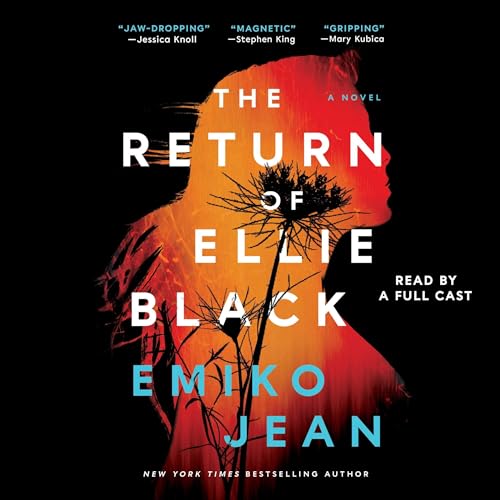
The Return of Ellie Black by Emiko Jean

Progress: 60% of 10 hours

Check this book out at: Goodreads

Synopsis:

Detective Chelsey Calhoun’s life is turned upside down when she gets the call Ellie Black, a girl who disappeared years earlier, has resurfaced in the woods of Washington state—but Ellie’s reappearance leaves Chelsey with more questions than answers.

It’s been twenty years since Detective Chelsey Calhoun’s sister vanished when they were teenagers, and ever since she’s been searching: for signs, for closure, for other missing girls. But happy endings are rare in Chelsey’s line of work.

Then a glimmer: local teenager Ellie Black, who disappeared without a trace two years earlier, has been found alive in the woods of Washington State.

But something is not right with Ellie. She won’t say where she’s been, or who she’s protecting, and it’s up to Chelsey to find the answers. She needs to get to the bottom of what happened to Ellie: for herself, and for the memory of her sister, but mostly for the next girl who could be taken—and who, unlike Ellie, might never return.

The debut thriller from New York Times bestselling author Emiko Jean, The Return of Ellie Black is both a feminist tour de force about the embers of hope that burn in the aftermath of tragedy and a twisty page-turner that will shock and surprise you right up until the final page.

How it’s going:

This is my audiobook for the week. So far it’s been very good. It has a slower plot than a lot of thrillers, which I like. I’m also enjoying the full cast of voices for the audiobook, it helps keep the different narrators straight. This book seems to be slowly leading me to the conclusion and engrossing me in the characters on our journey. It’s a character study almost. And a societal commentary also. This book isn’t just about Ellie Black, it’s about how society treats and views missing and kidnapped girls and women. I am enjoying this journey very much so far.

Review: Area 51 by Annie Jacobsen

Area 51 by Annie Jacobsen

Published: May 17, 2011 by Little, Brown & Company

Buy this book at: Amazon / Barnes & Noble / AbeBooks

Synopsis:

It is the most famous military installation in the world. And it doesn’t exist. Located a mere seventy-five miles outside of Las Vegas in Nevada’s desert, the base has never been acknowledged by the U.S. government-but Area 51 has captivated imaginations for decades.

Myths and hypotheses about Area 51 have long abounded, thanks to the intense secrecy enveloping it. Some claim it is home to aliens, underground tunnel systems, and nuclear facilities. Others believe that the lunar landing itself was filmed there. The prevalence of these rumors stems from the fact that no credible insider has ever divulged the truth about his time inside the base. Until now.

Annie Jacobsen had exclusive access to nineteen men who served the base proudly and secretly for decades and are now aged 75-92, and unprecedented access to fifty-five additional military and intelligence personnel, scientists, pilots, and engineers linked to the secret base, thirty-two of whom lived and worked there for extended periods. In Area 51, Jacobsen shows us what has really gone on in the Nevada desert, from testing nuclear weapons to building super-secret, supersonic jets to pursuing the War on Terror.

This is the first book based on interviews with eye witnesses to Area 51 history, which makes it the seminal work on the subject. Filled with formerly classified information that has never been accurately decoded for the public, Area 51 weaves the mysterious activities of the top-secret base into a gripping narrative, showing that facts are often more fantastic than fiction, especially when the distinction is almost impossible to make.

Rating:

Review:

Ask anyone who knows me and they’ll tell you that I am fascinated by conspiracy theories. I love reading about them. I love investigating why people believe these things. I look investigating instances where sometimes the conspiracy theory was actually the true story. So this book caught my attention for that reason right away. The first big batch of declassified documents relating to Area 51 were released in 2010-2011 and a lot of the information in this book is based off of that release. In addition to the interviews she conducted with people who worked there, it provided a very comprehensive review of the base’s history.

There was a ton of really interesting facts in here. Things that I never expected to find. For example, did you know that eventually the CIA decided that the unknown craft that crashed in Roswell was built by the Soviet Union? The Soviet’s had gotten in touch with some scientists that had been working in Germany while Hitler was in power and asked if they could make a flying disc. Then they put two kids (estimated to be 13 years old or so) into the craft so that people would believe they were aliens. The children were badly disfigured, and the CIA determined it was likely the work of Josef Mengele, also of Nazi origin. The idea was that the Soviets wanted the disc to crash and they hoped that Americans would see the corpses of the children and believe it was an alien craft. They wanted to start a panic. The secondary goal was to let the American President know that the Soviets weren’t intimidated by him and that they could violate US airspace if they wished. Now, that’s the story that the CIA tells and at least one interviewee told. Is that the truth? Maybe. Will we ever know if it is the truth or not? Unlikely.

I loved that this book laid out all the reasons why Area 51 has provided the perfect opportunity for UFO conspiracy theories. All through the 1930s, 40s, 50s, and 60s the US government was out there testing out advanced spy planes. They wanted something that flew faster than Soviet radar could detect and flew higher than their missles could reach. Naturally sometimes people saw these flights. And the citizens would see a plane flying faster and higher than any plane known to exist and naturally they found it extraterrestrial. The CIA tracked all of the UFO reports during these periods and found that most of the UFO sightings were of their spy plane flights. A smaller portion were conclusively identified as other things, weather balloons, other aircraft, natural phenomenon, etc. And a very small percentage of those reports couldn’t be identified. What were they? Well the US government say they don’t know. But all of these reports just further the hysteria and the conspiracy theories.

Before long, Area 51 because the best location for any nefarious government plot. From aliens to the moon landing, if there’s a conspiracy theory out there it probably gets tied to Area 51. But the real history is far more interesting. It’s a history of spy planes, nuclear bombs, testing of worst case scenarios, and place to hide government secrets. There’s a good reason that a large portion of Americans think there’s nefarious things going on at the base. The government has long used the base to do things that were not entirely ethical, not entirely moral, and sometimes not entirely legal either. All of it hidden in the shadows. Hidden from the people that the government says they’re protecting.

Overall, I found this book compelling and entrancing. I couldn’t put it down. Every single page was some new fascinating detail that had been hidden in the world of classified documents for half a century. My only complaint is that perhaps we waited too long for some of the interview details. I found myself wondering why that seemed like a side note, when it was perhaps the most eye opening part of the book. Despite this, the book was excellent and I have very few complaints.