Progress Update Fridays

Synopsis:

A shooting at a Chicago beach leaves several dead and dozens injured. In the year before the attack, four individuals emerge as possible suspects.

An apathetic computer programmer.
An ex-college athlete with a history of head injuries.
An Army veteran turned Chicago cop.
A despondent high school student.

One of them is the shooter. Discover who and why.

Progress: Page 49 of 354

Update: This book started off a tad confusing. The premise is that a shooting happens, that’s the opening scene of the book. Then we are introduced to several characters, and the book description tells us that one of these people is our shooter. We will discover who it is along the way. But since we haven’t named these people, just descriptions (like the student, the veteran, the ex-athlete) it was a little hard to track them at first. Now that I’m learning more of their personalities I think I have it figured it out now. They have images in my head that accompany them now, so that stumbling block should be tackled. I also have a suspect in mind, but at the same time it feels like the easy answer so I suspect it is not that person. Stay tuned, we’ll find out together.

Synopsis:

It is the most famous military installation in the world. And it doesn’t exist. Located a mere seventy-five miles outside of Las Vegas in Nevada’s desert, the base has never been acknowledged by the U.S. government-but Area 51 has captivated imaginations for decades.

Myths and hypotheses about Area 51 have long abounded, thanks to the intense secrecy enveloping it. Some claim it is home to aliens, underground tunnel systems, and nuclear facilities. Others believe that the lunar landing itself was filmed there. The prevalence of these rumors stems from the fact that no credible insider has ever divulged the truth about his time inside the base. Until now.

Annie Jacobsen had exclusive access to nineteen men who served the base proudly and secretly for decades and are now aged 75-92, and unprecedented access to fifty-five additional military and intelligence personnel, scientists, pilots, and engineers linked to the secret base, thirty-two of whom lived and worked there for extended periods. In Area 51, Jacobsen shows us what has really gone on in the Nevada desert, from testing nuclear weapons to building super-secret, supersonic jets to pursuing the War on Terror.

This is the first book based on interviews with eye witnesses to Area 51 history, which makes it the seminal work on the subject. Filled with formerly classified information that has never been accurately decoded for the public, Area 51 weaves the mysterious activities of the top-secret base into a gripping narrative, showing that facts are often more fantastic than fiction, especially when the distinction is almost impossible to make.

Progress: This is a bit of a cheat, I apologize, since I haven’t actually started this book yet. But I heard a very intriguing interview with Annie Jacobsen on the Lex Friedman podcast. She was there talking about her new book, Nuclear War. Nuclear War is about what the process looks like for a nuclear bomb to be unleashed. Who makes the call? What happens then? How long does it take? What if they’re wrong? Well, I want to read Nuclear War desperately, but I don’t have a copy of it yet. So, while I wait, I am reading another of her books. Also, if you haven’t checked out the Lex Friedman podcast, I highly recommend it. He has a ton of interesting conversations with fascinating people.
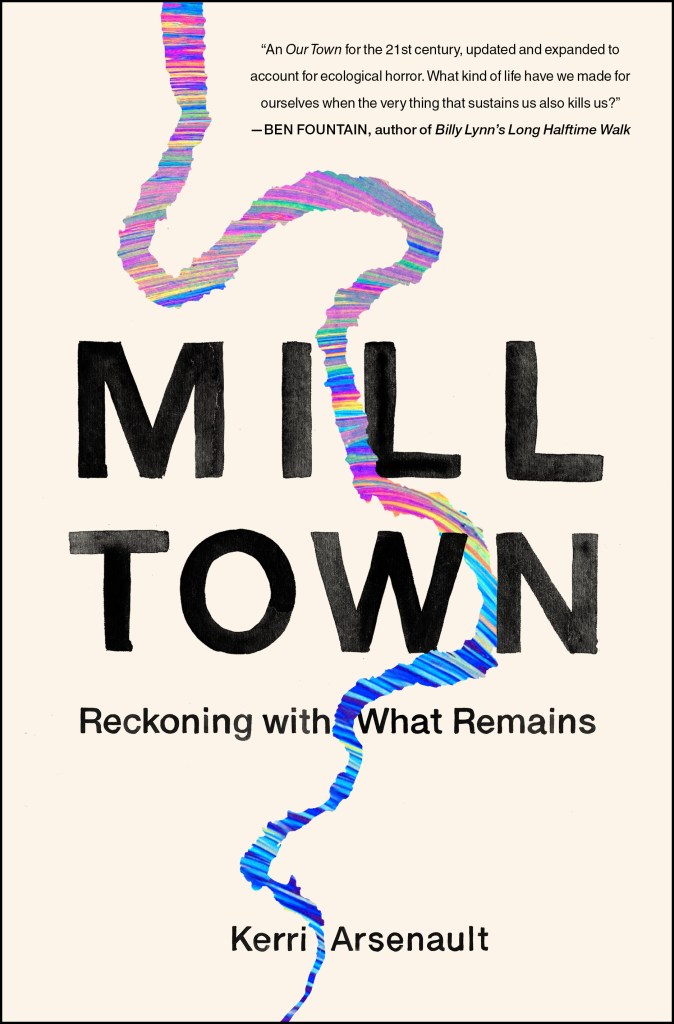
Audiobook Review: Mill Town by Kerri Arsenault

Mill Town: Reckoning With What Remains by Kerri Arsenault

Published: September 1, 2020 by Macmillan Audio

Buy this book: Amazon | Barnes & Noble | Book Depository

Rating:

Synopsis: Kerri Arsenault grew up in the rural working class town of Mexico, Maine. For over 100 years the community orbited around a paper mill that employs most townspeople, including three generations of Arsenault’s own family. Years after she moved away, Arsenault realized the price she paid for that seemingly secure childhood. The mill, while providing livelihoods for nearly everyone, also contributed to the destruction of the environment and the decline of the town’s economic, moral, and emotional health in a slow-moving catastrophe, earning the area the nickname “Cancer Valley.”

In Mill Town, Arsenault undertakes an excavation of a collective past, sifting through historical archives and scientific reports, talking to family and neighbors, and examining her own childhood to present a portrait of a community that illuminates not only the ruin of her hometown and the collapse of the working-class of America, but also the hazards of both living in and leaving home, and the silences we are all afraid to violate. In exquisite prose, Arsenault explores the corruption of bodies: the human body, bodies of water, and governmental bodies, and what it’s like to come from a place you love but doesn’t always love you back.

A galvanizing and powerful debut, Mill Town is an American story, a human predicament, and a moral wake-up call that asks: what are we willing to tolerate and whose lives are we willing to sacrifice for our own survival?

Review: ***I received a free copy of this audiobook in exchange for an honest review. Thank you Macmillan Audio and Netgalley!***

I’m not entirely sure where this book went wrong for me. Maybe I am not the right audience for it. Perhaps I should have read it versus listened to it. Perhaps I had the wrong expectations. I can’t say for sure but it was just boring.

The author of the book did the audiobook and that was the wrong choice. The entire book is read in deadpan. There is absolutely no life in it, no passion, no excitement. I was bored to tears listening to it and struggled to focus on what was being said.

The book had some interesting pieces to it. And I could tell that the author has a lot of strong feelings about how the story of her hometown relates to a larger picture of environmental irresponsibility, lack of corporate accountability and the deceit of the general public. Unfortunately that is way too large of a scope for a single book. So while the author makes some interesting points about these topics there is no depth or exploration of the idea.

There are also a LOT of tangents in this book. All of the material focusing on the town and the struggles and effects of the paper mill were really riveting. But there were also whole chapters on the town’s founding, her own family tree, her travel experiences and lots of other things. It detracted from the main story. Frankly, at times it self like a memoir of her family and that just wasn’t something I found interesting or compelling.

I got to about halfway through the audiobook before I couldn’t stand it any longer and stopped. I am sure this story will find its audience but I was not it.

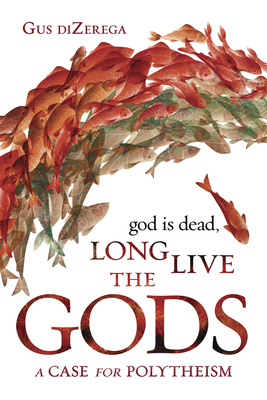
Review: God is Dead, Long Live the Gods by Gus diZerega

God is Dead, Long Live the Gods by Gus diZerega

Published: June 8, 2020 by Llewellyn Publications

Buy this book: Amazon | Barnes & Noble | Book Depository

Rating:

Synopsis: God is Dead, Long Live the Gods shows how polytheism–unlike monotheism–fits with the revolutionary ideas found in quantum physics, biology, and ecology. Beginning with the Enlightenment and the roots of what we now know as science, Western thought has generally turned away from religious belief. But what if the incompatibility of science and religion only applies to monotheism?

Gus diZerega explores contemporary science to show why consciousness is a fundamental aspect of reality, why the universe is alive at all levels, and why polytheistic experiences are as varied as the enormous array of life forms that enrich our world. This fascinating work develops a bold new vision for polytheism’s evolving role in our society and in our individual and collective spiritual experiences.

Review: ***Disclaimer: I received a free copy of this book in exchange for an honest review. Thank you NetGalley and Llewellyn Publications!***

I found this book utterly fascinating. I was not quite sure what to expect when I picked it up, but as a long time practicing polytheist I was interested in what the author had to say. The message was insightful, logical and very respectful. Sometimes books like this can come across as demonizing or ridiculing faiths that are traditionally considered monotheistic. But I didn’t get that vibe from this one at all.

The research that the author did on this was immense. Literally every paragraph has some quotation from a scholarly source. He looks at the vicious debates that Christianity has had with itself over its 2,000 year history as well as similar vicious theology debates that have happened in Islam and Judaism also. But rather than come to the conclusion that this means the faith is inherently flawed (as other authors have) diZerega instead focused on the why those theological debates are happening. They happen because of a logical fallacy in the theology, so in an effort to “close the gap” a new branch of the religion is formed on a similar but often very different theology. Leading to an entirely different idea of God.

At the end of the day, diZerega came away with a conclusion similar to the one that led me to polytheism all those years ago….religion is inherently polytheistic, even if it doesn’t recognize that fact itself. That no religion is inherently right or wrong, good or evil. He comes away with a vicious respect for the right to religious freedom and details a long history of religious totalitarianism from all branches of religion over human history. Acknowledging that when that control over faith is removed all of these theology debates crop up, which turns out to be a beautiful thing.

Ultimately all humans are looking for answers to how the universe works and the path that we take to get those answers is different for everyone. But ultimately we all might be a little happier if we recognize that following the logic is easier than living with the cognitive dissonance required by monotheism. I think this one will be making a space in my permanent library.