Audiobook review: My Darling Girl by Jennifer McMahon

My Darling Girl by Jennifer McMahon

Narrated by: Hillary Huber and Kitty Hendrix

Published: October 3, 2023 by Simon & Schuster Audio

Buy this book at: Amazon / Barnes & Noble / AbeBooks

Synopsis:

Alison has never been a fan of Christmas. But with it right around the corner and her husband busily decorating their cozy Vermont home, she has no choice but to face it. Then she gets the call.

Mavis, Alison’s estranged mother, has been diagnosed with cancer and has only weeks to live. She wants to spend her remaining days with her daughter, son-in-law, and two granddaughters. But Alison grew up with her mother’s alcoholism and violent abuse and is reluctant to unearth these traumatic memories. Still, she eventually agrees to take in Mavis, hoping that she and her mother could finally heal and have the relationship she’s always dreamed of.

But when mysterious and otherworldly things start happening upon Mavis’s arrival, Alison begins to suspect her mother is not quite who she seems. And as the holiday festivities turn into a nightmare, she must confront just how far she is willing to go to protect her family.

Rating:

Review:

This book can be summarized in one sentence: It was so good! Now that I got that out of my system, I will expand a little so that this isn’t the shortest review in history. I have never read this author before but she knows how to set a scene. This entire novel creeped me out. It made my skin crawl. It made me uncomfortable. It made my want to shout at the protagonist “No, don’t do that!”. And then the ending was one that I never saw coming.

I have to give a lot of credit to the narrators of this book. Their pacing was superb! This book is a slow burn, gradually ramping up the creepy factor and I feel like the narrators perfectly matched that tone and pace. Their voice work was also impressive. The subtle differences in tone for Mavis were perfect. Depending on who Mavis was having the conversation with, her entire tone changed and it was eerie.

For the plot, I really identified with Alison. Her story spoke to my own trauma in a lot of profound ways. But she escaped, she survived. She had a husband that adored her and two beautiful girls who had escaped their mother’s trauma. I was so proud of her. And then she got hit with the emotional wrecking ball. Her mother had cancer and wanted to spend her remaining weeks of life in Alison’s home trying to “make amends.” Alison was skeptical, and that made me even more proud of her. Unfortunately, her husband seemed to think it was a good idea! Why not let your horrendously abusive mother move in with us for a few weeks? What harm could it do? The more we learn about Alison and the abuse she suffered, the more angry I became at her husband. How dare he coerce her into letting her mother into their home. He knew the horrors of her childhood. The permanent scars (both physical and mental) that still haunted her. And he was willing to re-traumatize her all over again. Because “it’s your mom.” No sir, no it is not. You do not owe your family anything when they have abused you so thoroughly. Not a single thing. Alright, enough ranting, he really made me angry. But I recognize that if Mavis had never moved in then we wouldn’t have a book, so let’s move on.

The creep factor on this book was at an all time high. From the recollections of the abuse that Alison suffered to the creepy happenings in the present it was all fantastic. I was terrified for Alison and her children. Especially when it seemed like no one believed her. The ending was also shocking and creepy. The author laid out her red herrings perfectly, so I never saw it coming. It wasn’t a twist ending, it made complete and total sense, it was just executed really well. This author will definitely visit my bookshelf again.

Review: Area 51 by Annie Jacobsen

Area 51 by Annie Jacobsen

Published: May 17, 2011 by Little, Brown & Company

Buy this book at: Amazon / Barnes & Noble / AbeBooks

Synopsis:

It is the most famous military installation in the world. And it doesn’t exist. Located a mere seventy-five miles outside of Las Vegas in Nevada’s desert, the base has never been acknowledged by the U.S. government-but Area 51 has captivated imaginations for decades.

Myths and hypotheses about Area 51 have long abounded, thanks to the intense secrecy enveloping it. Some claim it is home to aliens, underground tunnel systems, and nuclear facilities. Others believe that the lunar landing itself was filmed there. The prevalence of these rumors stems from the fact that no credible insider has ever divulged the truth about his time inside the base. Until now.

Annie Jacobsen had exclusive access to nineteen men who served the base proudly and secretly for decades and are now aged 75-92, and unprecedented access to fifty-five additional military and intelligence personnel, scientists, pilots, and engineers linked to the secret base, thirty-two of whom lived and worked there for extended periods. In Area 51, Jacobsen shows us what has really gone on in the Nevada desert, from testing nuclear weapons to building super-secret, supersonic jets to pursuing the War on Terror.

This is the first book based on interviews with eye witnesses to Area 51 history, which makes it the seminal work on the subject. Filled with formerly classified information that has never been accurately decoded for the public, Area 51 weaves the mysterious activities of the top-secret base into a gripping narrative, showing that facts are often more fantastic than fiction, especially when the distinction is almost impossible to make.

Rating:

Review:

Ask anyone who knows me and they’ll tell you that I am fascinated by conspiracy theories. I love reading about them. I love investigating why people believe these things. I look investigating instances where sometimes the conspiracy theory was actually the true story. So this book caught my attention for that reason right away. The first big batch of declassified documents relating to Area 51 were released in 2010-2011 and a lot of the information in this book is based off of that release. In addition to the interviews she conducted with people who worked there, it provided a very comprehensive review of the base’s history.

There was a ton of really interesting facts in here. Things that I never expected to find. For example, did you know that eventually the CIA decided that the unknown craft that crashed in Roswell was built by the Soviet Union? The Soviet’s had gotten in touch with some scientists that had been working in Germany while Hitler was in power and asked if they could make a flying disc. Then they put two kids (estimated to be 13 years old or so) into the craft so that people would believe they were aliens. The children were badly disfigured, and the CIA determined it was likely the work of Josef Mengele, also of Nazi origin. The idea was that the Soviets wanted the disc to crash and they hoped that Americans would see the corpses of the children and believe it was an alien craft. They wanted to start a panic. The secondary goal was to let the American President know that the Soviets weren’t intimidated by him and that they could violate US airspace if they wished. Now, that’s the story that the CIA tells and at least one interviewee told. Is that the truth? Maybe. Will we ever know if it is the truth or not? Unlikely.

I loved that this book laid out all the reasons why Area 51 has provided the perfect opportunity for UFO conspiracy theories. All through the 1930s, 40s, 50s, and 60s the US government was out there testing out advanced spy planes. They wanted something that flew faster than Soviet radar could detect and flew higher than their missles could reach. Naturally sometimes people saw these flights. And the citizens would see a plane flying faster and higher than any plane known to exist and naturally they found it extraterrestrial. The CIA tracked all of the UFO reports during these periods and found that most of the UFO sightings were of their spy plane flights. A smaller portion were conclusively identified as other things, weather balloons, other aircraft, natural phenomenon, etc. And a very small percentage of those reports couldn’t be identified. What were they? Well the US government say they don’t know. But all of these reports just further the hysteria and the conspiracy theories.

Before long, Area 51 because the best location for any nefarious government plot. From aliens to the moon landing, if there’s a conspiracy theory out there it probably gets tied to Area 51. But the real history is far more interesting. It’s a history of spy planes, nuclear bombs, testing of worst case scenarios, and place to hide government secrets. There’s a good reason that a large portion of Americans think there’s nefarious things going on at the base. The government has long used the base to do things that were not entirely ethical, not entirely moral, and sometimes not entirely legal either. All of it hidden in the shadows. Hidden from the people that the government says they’re protecting.

Overall, I found this book compelling and entrancing. I couldn’t put it down. Every single page was some new fascinating detail that had been hidden in the world of classified documents for half a century. My only complaint is that perhaps we waited too long for some of the interview details. I found myself wondering why that seemed like a side note, when it was perhaps the most eye opening part of the book. Despite this, the book was excellent and I have very few complaints.

Review: A Letter to the Luminous Deep by Sylvie Cathrall

A Letter to the Luminous Deep by Sylvie Cathrall

Published: April 25, 2024 by Orbit

Buy this book at: Amazon / Barnes & Noble / AbeBooks

Synopsis:

Dive into the curious correspondence of Sylvie Cathrall’s delightful debut novel, A Letter to the Luminous Deep.

A beautiful discovery outside the window of her underwater home prompts the reclusive E. to begin a correspondence with renowned scholar Henerey Clel. The letters they share are filled with passion, at first for their mutual interests, and then, inevitably, for each other.

Together, they uncover a mystery from the unknown depths, destined to transform the underwater world they both equally fear and love. But by no mere coincidence, a seaquake destroys E.’s home, and she and Henerey vanish.

A year later, E.’s sister Sophy, and Henerey’s brother Vyerin, are left to solve the mystery of their siblings’ disappearances with the letters, sketches and field notes left behind. As they uncover the wondrous love their siblings shared, Sophy and Vyerin learn the key to their disappearance – and what it could mean for life as they know it.

Perfect for fans of A Marvellous Light and TJ Klune, A Letter to the Luminous Deep is a whimsical epistolary fantasy set in a mystical underwater world with mystery and heart-warming romance.

Rating:

Review:

As evidenced by how quickly I breezed through this book (only halfway done on Friday), it was a lovely read. This book quickly introduces us to our two main characters. The introverted, brilliant, troubled “E”. She lives in an underwater home known as the Deep House. One day she spots a creature through her porthole that she’s never seen before. Struck by its beauty she writes to a well known natural Scholar that she admires, Henerey. The two strike up a correspondence about these creatures and what they could be, and then it moves into more of a general conversation about their lives and interests. The interesting part is that we only learn about E and Henerey through their letters to each other, and to and from their siblings. Even when they meet in person, the only details we know about it are what E shared with her sister, Sophy, about the evening.

Later, when Sophy and Vyerin start to unravel the mystery of what happened to their missing siblings, we also only follow their correspondence with each other. The entire book is told in letters between the characters, occasional excerpts from Henerey’s journals, and a few transcriptions from other scholarly works within the world. It’s an inventive way to tell a story. I also imagine it was quite difficult to write.

Because of the writing style the characters are full of depth and personality. I learned intently who each of these individuals are, and I grew to adore each of them immensely. I also enjoyed that both of the main protagonists deal with mental health concerns or are otherwise neurodivergent. As a neurodivergent individual myself I found it very relatable and genuine. The character building in this novel was top notch. I can’t say enough good things about that aspect. However, the writing did present a challenge when it came to world building. There’s a lot of things that I feel were left out. At the end of the book I knew so little about E and Henerey’s world. And the main culprit to that is the writing style. If E is writing to Henerey, she doesn’t need to explain to him the history of their civilization, he already knows. But I would like it explained to me, because I don’t know. It’s a unique challenge. I feel like the author tried to overcome this with the excerpts from scholarly books in the book, but it wasn’t enough. I wanted to know more. I hope we get more in upcoming books.

The romance in the story was sweet and simple. E and Henerey flirted with each other through their individual interests. They each showed an enormous amount of restraint and respect for the other’s boundaries. For example, even after they agreed to meet in person Henerey told her “If you change your mind, even if I’m already on my way, just put a sign in your window that says NO HENEREY and I’ll leave and think none the worse for it.” It was so cute, and so romantic. Each of them met the other exactly where they were capable of existing, and both were content with it. Sigh. I think I might have fallen in love with these two also. They are just so adorable and relatable.

The mystery in the book was intriguing. I started putting the pieces together fairly early, but it didn’t make the journey any less enjoyable. Even though I knew where it was headed, I still enjoyed watching Sophy and Vyerin put those same pieces together. And at the end, we finished one piece of the adventure and looked to the horizon for the start of the next adventure. You can’t ask for a much better ending than that.

Audiobook Review: Good Girls Don’t Die by Christina Henry

Good Girls Don’t Die by Christina Henry

Narrated by: Lisa Flanagan

Published: November 14, 2023 by Penguin Audio

Buy this book at: Amazon / Kobo / AbeBooks

Synopsis:

Celia wakes up in a house that’s supposed to be hers. There’s a little girl who claims to be her daughter and a man who claims to be her husband, but Celia knows this family—and this life—is not hers…

Allie is supposed to be on a fun weekend trip—but then her friend’s boyfriend unexpectedly invites the group to a remote cabin in the woods. No one else believes Allie, but she is sure that something about this trip is very, very wrong…

Maggie just wants to be home with her daughter, but she’s in a dangerous situation and she doesn’t know who put her there or why. She’ll have to fight with everything she has to survive…

Three women. Three stories. Only one way out. This captivating novel will keep readers guessing until the very end.

Rating:

Review:

The premise of this book was exciting. Women who had been seemingly abducted into lives that weren’t their own, forced to find a way out. Who was responsible? What was the reason? Would they escape? I love a good mystery and I was enthusiastic to see where this book went. The narrator was fabulous, giving each of the women their own personality and inflection, it really made me connect with them individually.

This could have easily been a five star read, if not for the ended. Each of these individual women’s stories were compelling. The women themselves were interesting and unique, I enjoyed their narrative and following along with them. The scenarios played out in a riveting manner, I couldn’t wait to hear what happened next. I was entranced by the book. I developed a theory about what it was all about, who was responsible for the women’s plights.

Then I got to the ending. I was excited! We were finally going to see who the guilty party was! The women were going to get answers. I was going to see if my pet theory was correct. But it wasn’t. And the actual ending wasn’t good either. It was a completely stereotypical trope. It was far fetched. It came out of left field. It made very little sense. And so, I finished this fabulous book with a “huh….so, that was it?” And then I turned to a podcast because it was so disappointing. Overall I really loved this book, and I will likely read other books from this author because I enjoy how she writes, but this one fell flat in the end.

Review: Parabellum by Greg Hickey

Parabellum by Greg Hickey

Published: October 20, 2020 by Greg Hickey

Buy this book at: Amazon / Barnes & Noble / AbeBooks

Synopsis:

A shooting at a Chicago beach leaves several dead and dozens injured. In the year before the attack, four individuals emerge as possible suspects.

An apathetic computer programmer.
An ex-college athlete with a history of head injuries.
An Army veteran turned Chicago cop.
A despondent high school student.

One of them is the shooter. Discover who and why.

Rating:

Review: ***Disclaimer: I received a free copy of this book in exchange for an honest review. Thank you Greg Hickey! My apologies that it took me so long.***

When I started reading this book, I looked up the title to see what it meant. Parabellum. I found a few interesting things. One definition of the word is a semiautomatic pistol, which in the context of the subject of the book seemed apt. But even more apt but that I found the term “Para bellum”. It’s a Latin phrase that means “prepare for war”, it is often included in a longer quote of “If you want peace, prepare for war.” This is also surprisingly topical for this book.

At the beginning of the book, I thought I had a pretty good idea who the shooter was. I initially suspected the programmer. He seemed the most likely suspect. Apathetic in general but with a hint of sociopathy. He seemed to view other humans as an experiment, something interesting to watch but ultimately non-consequential. Along the way, as we learn more about each of these characters, it honestly could have been any of them. The high school student who is hypercritical of himself, never feels good enough, and is largely ostracized by his peers. The former athlete who’s repeated head traumas have caused her to be experiencing a lack of control over her anger and fueling resentment at the world. And the veteran turned cop who is struggling with PTSD and having a difficult time finding meaning in his life now that the war is over. By the middle of the book, even though I thought the programmer was still the most likely, all of them were viable.

I really enjoyed learning about these characters, interspersed with passages that seemed to be from the killer’s manifesto. I found great sympathy for all of them. All of them had justifiable anger at the world and their community. My only complaint about this book was that the ending chapters were a bit confusing. I had to go back a few times a read over one of the pages because I wasn’t quite sure what was going on. And, when the killer is revealed, I didn’t think it was the best choice. It seemed to me that this person was the person that the author intended to be the shooter before writing the book. But as the story went on and the characters evolved, I didn’t feel like they were the best choice any longer. So, the ending fell a bit flat as a result. Overall, I enjoy the way the author writes and I love his ideas.

Audiobook Review: Camp Zero by Michelle Min Sterling

Camp Zero by Michelle Min Sterling

Narrated by: Emily Tremaine, Greta Jung and Graham Halstead

Published: April 4, 2023 by Simon & Schuster Audio

Buy this book at: Amazon / Barnes & Noble / Kobo

Synopsis:

In the far north of Canada sits Camp Zero, an American building project hiding many secrets.

Desperate to help her climate-displaced Korean immigrant mother, Rose agrees to travel to Camp Zero and spy on its architect in exchange for housing. She arrives at the same time as another newcomer, a college professor named Grant who is determined to flee his wealthy family’s dark legacy. Gradually, they realize that there is more to the architect than previously thought, and a disturbing mystery lurks beneath the surface of the camp. At the same time, rumors abound of an elite group of women soldiers living and working at a nearby Cold War-era climate research station. What are they doing there? And who is leading them?

An electrifying page-turner where nothing is as it seems, Camp Zero cleverly explores how the intersection of gender, class, and migration will impact who and what will survive in a warming world.

Rating:

Review:

“Why do men take so easily whatever they want? Because nothing will ever be enough, she realizes. The more a man possesses, the more he thinks he deserves.”

This book tried to accomplish a lot of things in its pages. This audiobook ran for 10 hours and some change, so an average length story. But this book wanted to be a dystopian thriller, a commentary on climate change, a commentary on race, and a commentary on gender, plus throw in some examination of misogyny. In the end, it was largely successful on these fronts. But not all of them.

This book follows the perspective of three individuals/groups. Rose is a half-Korean young woman who is hired at the camp as a “Bloom”, a woman who is hired to “entertain” the men in charge. What this means without euphemism is that she is a sex worker. Sex work seems to be a large part of the world of Camp Zero, and it’s an interesting examination of gender roles. Many of the woman seem perfectly happy to be involved in sex work, viewing it as a way to make a better living than most other jobs, and an opportunity to better their station in the world. In Rose’s case she is not only at camp as a sex worker. She has also been tasked as a spy. We don’t learn exactly what her mission in for quite a long time, but there are clues along the way. She also tells us about her childhood and her mother’s life. This was a really great way to not only build the character but the world. We see several different facets of life in the world of Camp Zero through her eyes. And they were all fascinating. I loved the bits that talked about Rose’s history, I learned so many interesting things.

We also follow Grant. He is a trust fund baby. His family is one of the wealthiest and most influential families in this world. But when a tragedy leaves him examining his privilege, he is desperate to escape his family’s influence and make his own reputation. That’s why he takes the job to be an English teacher at this remote northern camp. He figures that it is so remote that his father’s influence couldn’t possibly reach him and he will be free. But he quickly learns that the job he was hired for isn’t exactly what he thought it would be. He is also very troubled by the existence of the Blooms. All in all, I grew to like Grant by the end but found him horribly naïve. It was quite clear to me that he had lived in a giant bubble for his entire life.

The third narrative is that of White Alice. This narrative is presented in the plural, it is the story of a group of women. These women are tasked with manning a climate change research outpost. Every day they are to report on the changes to the environment and also work on methods of living independently in a largely inhospitable environment. At first the woman are apprehensive about working together, having come from the male dominated military. But, over time, they build relationships and a community and find the remoteness of their lives to be refreshing and comforting. I loved the story of the women of White Alice, though I struggled to understand their relevance to the larger story for longer than I thought. In the end the narratives came together, but it took awhile to get there.

Each of these narratives has its own narrator. I found all of the narrators to be very good at their job. They humanized their characters and their individual styles were complimentary to the other narrators, so the narration felt seamless. It also made it extremely easy for the listener to identify who was telling us the story and when we switched narratives.

My only complaints about this book are that it tries to take on too much. Between the climate change, gender roles, misogyny, racism, wealth privilege…it all just started to feel a little too surface level. We don’t get an opportunity to examine any of these issues with any depth because there’s so many other themes happening. The ending was very good, but it got a little bit confusing. There was a lot of action happening and frequent narrative switching and this was the only time I found it confusing to follow what was happening. I caught up in the end and enjoyed the conclusion. I feel that this book stands on its own perfectly well, but I would be very happy to see the author visit this world again.

Review: Pride’s Children by Alicia Butcher Ehrhardt

Pride’s Children: Purgatory by Alicia Butcher Ehrhardt

Published: March 31, 2015 by Trilka Press

Buy this book: Amazon / Thriftbooks

Rating:

Synopsis:

WHAT YOU DO WITH AN OBSESSION COUNTS

“I, KARENNA ELIZABETH Ashe, being of sound mind, do… But that’s it, isn’t it? Being here proves I am not of sound mind…”

So begins Book 1 of the Pride’s Children trilogy: Kary immediately regrets the misplaced sense of noblesse oblige which compels her to appear, live on national television—at exorbitant personal cost.

What she cannot anticipate is an entanglement with Hollywood that may destroy her carefully-constructed solitudinarian life.

A contemporary mainstream love story, in the epic tradition of Jane Eyre, and Dorothy L. Sayers’ four-novel bond between Lord Peter Wimsey and Harriet Vane, Pride’s Children starts with a very public chance encounter, and will eventually stretch over three separate continents.

Review:

***Disclaimer: I received a free copy of this book from the author in exchange for a review. Thank you Alicia and I’m sorry it took me so long. ***

This book and I had an interesting journey. At first I struggled with the writing style. It’s a combination of literary fiction and stream of consciousness writing. I found myself putting the book down and wondering if, perhaps, it just wasn’t my style. And then I would pick it up again. And again. And again. It became my comfort book.

The characters are what make this a great book. Andrew is delightfully witty and smarmy. He’s very likeable, I instantly knew why Kary was so drawn to him. I was drawn to him! Kary was a thoughtful character. I understood her reluctance to engage with Andrew but was frustrated by it at the same time. More than once, I announced, “Kary, let the man do something nice for you! He likes you, I know you haven’t noticed!” Bianca was probably my least favorite character. I found her one dimensional. She is there to provide a stumbling block to the romance, but since no one paid attention to her, she was rather inconsequential. Perhaps she will play a more active role in the next book.

The plot was delightful. It was clear, concise, and the perfect vehicle to take our characters from one place to another. I found the level of detail about film sets and the writing process quite refreshing. It felt authentic. The only place that the plot lagged was in the middle. I got the sense that I was waiting for the “big moment” to happen. That moment eventually happened, but it took a while to get there.

Overall, this book was a fun and emotional journey. I recommend it if you’re a fan of literary fiction and character driven plots.

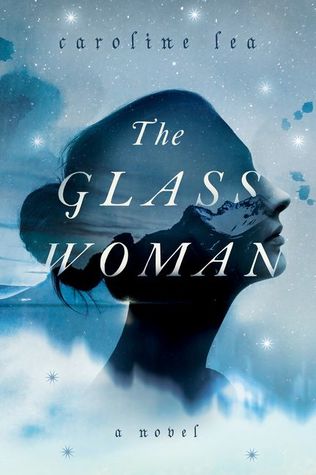
Review: The Glass Woman by Caroline Lea

The Glass Woman by Caroline Lea

Published: September 3, 2019 by Harper

Buy this book: Amazon | Barnes & Noble | Book Depository

Rating:

Synopsis: Rósa has always dreamed of living a simple life alongside her Mamma in their remote village in Iceland, where she prays to the Christian God aloud during the day, whispering enchantments to the old gods alone at night. But after her father dies abruptly and her Mamma becomes ill, Rósa marries herself off to a visiting trader in exchange for a dowry, despite rumors of mysterious circumstances surrounding his first wife’s death.

Rósa follows her new husband, Jón, across the treacherous countryside to his remote home near the sea. There Jón works the field during the day, expecting Rósa to maintain their house in his absence with the deference of a good Christian wife. What Rósa did not anticipate was the fierce loneliness she would feel in her new home, where Jón forbids her from interacting with the locals in the nearby settlement and barely speaks to her himself.

Seclusion from the outside world isn’t the only troubling aspect of her new life — Rósa is also forbidden from going into Jón’s. When Rósa begins to hear strange noises from upstairs, she turns to the local woman in an attempt to find solace. But the villager’s words are even more troubling—confirming many of the rumors about Jón’s first wife, Anna, including that he buried her body alone in the middle of the night.

Rósa’s isolation begins to play tricks on her mind: What — or who — is in the attic? What happened to Anna? Was she mad, a witch, or just a victim of Jón’s ruthless nature? And when Jón is brutally maimed in an accident a series of events are set in motion that will force Rósa to choose between obedience and defiance — with her own survival and the safety of the ones she loves hanging in the balance.

Review: I picked up this book on a whim. I found the cover spectacular and the synopsis piqued my interest. In all my years I don’t believe that I have read too many books set in Iceland. 1600’s, newly Christianized, Iceland to boot. This caught my attention and made me want to read it.

I loved the premise of this story. Iceland as a whole is caught in this transitional period of being newly Christianized but a lot of the community are finding it difficult to give up the old pagan ways. So while they know that their local pastor will accuse them of witchcraft for it, they can’t seem to let it to entirely. That makes for a very interesting scenario. Rosa is one of those people. She has embraced the new Christian faith but still finds a lot of comfort in the runes and sagas from her youth. Her father has passed away and in an effort to ensure that her mother doesn’t follow him to the grave she makes an advantageous marriage to Jon.

Jon was an all around interesting character. He doesn’t say much but toward the end of the book we get a few snippets of his narration of the story. He was also caught. He grew up poor. He scraped and scrabbled his way to being the leader of his village. Unfortunately that means he is that the heart of every rumor and his name is on the lips of every troublemaker. And the local pastor doesn’t like him too much and so is very eager to find something he can pin on him.

These two were not my favorite however, that honor is reserved for Petur. He is Jon’s right hand man. No one is quite clear on why he’s so committed to protecting Jon but he is an unstoppable force. Rumors have abounded about him since he first stumbled out of the frozen woods as a child. Everyone seems to want to hate him. He was so funny and witty. And tough as nails. I loved him endlessly.

The actual plot was a good one. A young woman suddenly finds herself living with her new husband, whom she doesn’t really know, and quickly finds herself often alone. Jon is often traveling or out in the fields, leaving her alone in the house for extended periods. She thinks she hears noises. Scrabbling, scraping, sometimes whispering from the attic. But she can’t investigate because Jon keeps it locked and has forbidden her to go up there. It quickly sparks her paranoia about the rumors regarding the fate of Jon’s first wife. Could it be her in the attic? Her ghost perhaps? Some spectre coming to haunt Rosa for stupidly agreeing to this marriage? It was wonderful.

My biggest complaint was Rosa’s character. While I understood her fear initially, eventually it started to wear on me. She kept flinching away from Jon like a beaten animal and didn’t dare speak in his presence. She took every single thing that he said in a threatening manner, even when it wasn’t clear that there was any threatening intent. And he had never even been physically intimidating to her and never actually hurt her in any way. So initially the fear of an unknown husband with a ferocious reputation made sense. But as time went on I couldn’t felt thinking “Wtf are you flinching from woman? He has never done a thing to you. Grow some ovaries, gods.”

The other thing that brings this book down for me was the author’s note at the end. I was curious to read it because I wondered where the author got her inspiration from for this story. It was so wonderfully rich and unique. I know there are some who will find it unfair for me to add a judgment of the book on the author’s note but it aggravated me too much to overlook. The author signs off on her author’s note saying that she identifies with Rosa….and experiences similar struggles. That she has had the experience of quaking in fear because of the presence of a man, felt powerless to his authority. She hoped that her sons wouldn’t grow up to feel entitled to the world because they are men. And hopes for a day when her nieces don’t have to “put on their armor just to leave the house.” What the actual fuck is this woman talking about? Is she legitimately comparing the power dynamics in gender between the United States in 2020 and 1686 Iceland? She feels it’s an apt comparison between her irrational fear of a man’s very presence and a society where the mark of a good husband is that he doesn’t beat you? I have never had to put on armor to leave the house, not once in all my life. And hopefully she’s not raising her sons to be jerks, or else they’ll inevitably end up as jerks. I found it so tiresome. It detracted from the book and left a bad taste in my mouth.

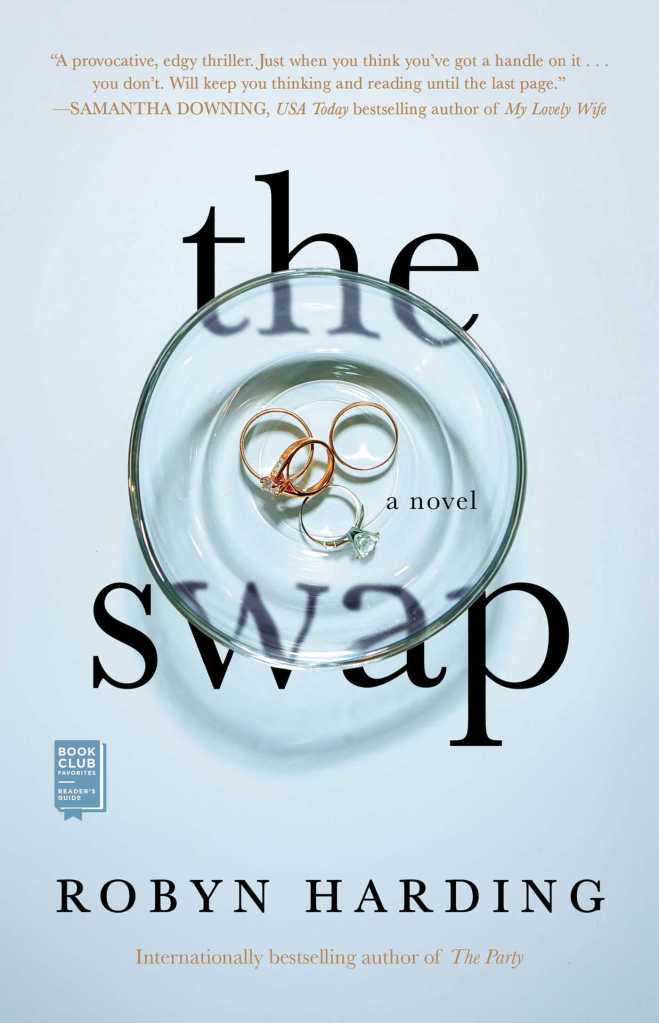
Review: The Swap by Robyn Harding

The Swap by Robyn Harding

Published: June 23, 2020 by Gallery

Buy this book: Amazon | Barnes & Noble | Book Depository

Rating:

Synopsis: Low Morrison is not your average teen. You could blame her hippie parents or her looming height or her dreary, isolated hometown on an island in the Pacific Northwest. But whatever the reason, Low just doesn’t fit in—and neither does Freya, an ethereal beauty and once-famous social media influencer who now owns the local pottery studio.

After signing up for a class, Low quickly falls under Freya’s spell. And Freya, buoyed by Low’s adoration, is compelled to share her darkest secrets and deepest desires. Finally, both feel a sense of belonging…that is, until Jamie walks through the studio door. Desperate for a baby, she and her husband have moved to the island hoping that the healthy environment will result in a pregnancy. Freya and Jamie become fast friends, as do their husbands, leaving Low alone once again.

Then one night, after a boozy dinner party, Freya suggests swapping partners. It should have been a harmless fling between consenting adults, one night of debauchery that they would put behind them, but instead, it upends their lives. And provides Low the perfect opportunity to unleash her growing resentment.

Review: ***Disclaimer: I received a free copy of this book in exchange for an honest review. Thank you NetGalley and Gallery Books!***

This was the first book I have read by Robyn Harding but it will not be the last. This book was such a deliciously dark guilty pleasure. If you need to have a likeable character in your books then this one might not be the one for you. A LOT of people really hated everyone. I kind of liked Low but I think it was because I empathized with her from my own experiences at that age.

Low is a girl who is searching for something to call her own. She has a polyamorous family, both of her parents have other partners on a regular basis and occasionally on a short term basis. She doesn’t have many friends in school because the other kids look down on her because of her weird family and because she is rather strange herself. She goes by Low because her hippy dippy parents named her Swallow (after the bird) because….well they are idiots. They prove how idiotic they are over and over again. Low finds herself attracted to Freya and she struggles to try and figure out why. Is it a friend thing? A romantic thing? A sex thing? She isn’t sure and wants desperately to just have a friend that is all hers so she can figure that out. I empathized with that coming of age struggle. As a result, she got a lot of leeway from me for some of the terrible thing she did. Yes, she did those things. Yes they were wrong. But she is a dumb kid that got taken advantage of and betrayed by the adults around her.

Freya was just delightfully devious. I could never really get a read on her. Was she evil? Or just rather self absorbed and selfish? It was hard to tell and her character made me feel constantly off balance. She utilizes both Jamie and Low as weapons against each other, ruthlessly pitting them against each other in a competition for her affection.

Jamie took me by surprise. Her character was largely boring. Then suddenly when her friendship with Freya was threatened she exploded into action and it was wonderful! Her husband though was as boring as watching paint dry.

The twists and turns kept me wondering what was going to happen the entire book. But looking back none of the things that happened come out of nowhere. They were the logical journey of the story but I didn’t see it. I could not put this book down. It was delicious.

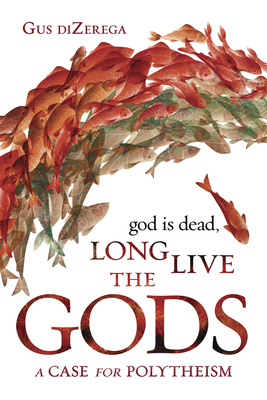
Review: God is Dead, Long Live the Gods by Gus diZerega

God is Dead, Long Live the Gods by Gus diZerega

Published: June 8, 2020 by Llewellyn Publications

Buy this book: Amazon | Barnes & Noble | Book Depository

Rating:

Synopsis: God is Dead, Long Live the Gods shows how polytheism–unlike monotheism–fits with the revolutionary ideas found in quantum physics, biology, and ecology. Beginning with the Enlightenment and the roots of what we now know as science, Western thought has generally turned away from religious belief. But what if the incompatibility of science and religion only applies to monotheism?

Gus diZerega explores contemporary science to show why consciousness is a fundamental aspect of reality, why the universe is alive at all levels, and why polytheistic experiences are as varied as the enormous array of life forms that enrich our world. This fascinating work develops a bold new vision for polytheism’s evolving role in our society and in our individual and collective spiritual experiences.

Review: ***Disclaimer: I received a free copy of this book in exchange for an honest review. Thank you NetGalley and Llewellyn Publications!***

I found this book utterly fascinating. I was not quite sure what to expect when I picked it up, but as a long time practicing polytheist I was interested in what the author had to say. The message was insightful, logical and very respectful. Sometimes books like this can come across as demonizing or ridiculing faiths that are traditionally considered monotheistic. But I didn’t get that vibe from this one at all.

The research that the author did on this was immense. Literally every paragraph has some quotation from a scholarly source. He looks at the vicious debates that Christianity has had with itself over its 2,000 year history as well as similar vicious theology debates that have happened in Islam and Judaism also. But rather than come to the conclusion that this means the faith is inherently flawed (as other authors have) diZerega instead focused on the why those theological debates are happening. They happen because of a logical fallacy in the theology, so in an effort to “close the gap” a new branch of the religion is formed on a similar but often very different theology. Leading to an entirely different idea of God.

At the end of the day, diZerega came away with a conclusion similar to the one that led me to polytheism all those years ago….religion is inherently polytheistic, even if it doesn’t recognize that fact itself. That no religion is inherently right or wrong, good or evil. He comes away with a vicious respect for the right to religious freedom and details a long history of religious totalitarianism from all branches of religion over human history. Acknowledging that when that control over faith is removed all of these theology debates crop up, which turns out to be a beautiful thing.

Ultimately all humans are looking for answers to how the universe works and the path that we take to get those answers is different for everyone. But ultimately we all might be a little happier if we recognize that following the logic is easier than living with the cognitive dissonance required by monotheism. I think this one will be making a space in my permanent library.