Doppelganger Review: Less of a journey, more of a screed

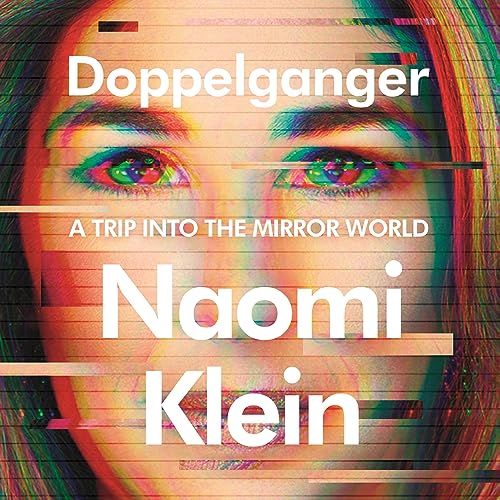
Doppelganger by Naomi Klein

Published: September 12, 2023 by MacMillan

Buy this book at: Amazon / Barnes & Noble / Kobo

Synopsis:

What if you woke up one morning and found you’d acquired another self―a double who was almost you and yet not you at all? What if that double shared many of your preoccupations but, in a twisted, upside-down way, furthered the very causes you’d devoted your life to fighting against?

Not long ago, the celebrated activist and public intellectual Naomi Klein had just such an experience―she was confronted with a doppelganger whose views she found abhorrent but whose name and public persona were sufficiently similar to her own that many people got confused about who was who. Destabilized, she lost her bearings, until she began to understand the experience as one manifestation of a strangeness many of us have come to know but struggle to define: AI-generated text is blurring the line between genuine and spurious communication; New Age wellness entrepreneurs turned anti-vaxxers are scrambling familiar political allegiances of left and right; and liberal democracies are teetering on the edge of absurdist authoritarianism, even as the oceans rise. Under such conditions, reality itself seems to have become unmoored. Is there a cure for our moment of collective vertigo?

Naomi Klein is one of our most trenchant and influential social critics, an essential analyst of what branding, austerity, and climate profiteering have done to our societies and souls. Here she turns her gaze inward to our psychic landscapes, and outward to the possibilities for building hope amid intersecting economic, medical, and political crises. With the assistance of Sigmund Freud, Jordan Peele, Alfred Hitchcock, and bell hooks, among other accomplices, Klein uses wry humor and a keen sense of the ridiculous to face the strange doubles that haunt us―and that have come to feel as intimate and proximate as a warped reflection in the mirror.

Combining comic memoir with chilling reportage and cobweb-clearing analysis, Klein seeks to smash that mirror and chart a path beyond despair. Doppelganger What do we neglect as we polish and perfect our digital reflections? Is it possible to dispose of our doubles and overcome the pathologies of a culture of multiplication? Can we create a politics of collective care and undertake a true reckoning with historical crimes? The result is a revelatory treatment of the way many of us think and feel now―and an intellectual adventure story for our times.

Rating:

Review:

This book was so bad. It was so bad that I gave up about 40% of the way through because I was feeling physically ill at the thought of reading any more. The synopsis asks a lot of interesting questions and I am familiar with Naomi Klein so I was hopeful that we’d get a good examination of self-identification, digital selves, and how our sense of self online might be influenced by AI/filters/influencers/etc. Unfortunately there is none of that in there.

This book starts with a simple premise. Naomi Klein frequently gets confused with Naomi Wolf. As the author says, the confusion makes some sense. Both of them share a first name. They are both women. They are both Jewish. They are both feminist authors and liberal activists. She expresses that she used to have a great admiration for Naomi Wolf, who she dubs “Other Naomi”, ever since she published The Beauty Myth in 1990. Both of them are known for their feminist takes on the world, and their dislike of greed driven capitalism. But during COVID, things starts to change. The author discovered that Other Naomi didn’t agree with her on a lot of COVID related issues. The author’s reaction to that, and the frequent confusion between them online, decided that the best course of action to take was to spend thousand of hours figuring out everything that Other Naomi was saying and doing online. She admits to neglecting her family and other life things to do so. Let’s just start with that idea. It doesn’t sound healthy. It sounds like maybe you should have taken a walk and turned off the internet for awhile.

Most of this book is a screed that is meant to harangue Other Naomi for all of her terrible opinions. And let’s be clear, Naomi Wolf has a lot of terrible opinions. But not all of them, and that is where the author started to lose credibility. She lambasts Other Naomi for suggesting that the COVID vaccine was causing menstrual issues for women. But yet, a few short years later, it was proven that it was true. Thousands of women experienced changes to their menstrual cycle after taking the COVID vaccine. Thousands of them. The National Institute of Health has published several studies about this, and a large percentage of women reported menstrual effects. So, sorry Naomi Klein this was a bad take because you were wrong.

Or when she lambasts Other Naomi for suggesting that young people shouldn’t get the vaccine because the risks don’t outweigh the benefits, and Other Naomi cites the heart issues that were making headlines as an example. Naomi Klein insists that COVID is horrible dangerous, and a potentially risky side effect is worth it! That’s her opinion, and one that she’s entitled to. But in the 2 years since COVID it’s become apparent that the risk was non-existent for healthy young people. The risk of being hospitalized or dying for a healthy young person was about 1%. And the vaccine is not useful for preventing spread to other people…so….what benefit could be gained by the potential risk? This take didn’t age well either.

So while we’re spending 90% of our time railing at Other Naomi for being wrong and bad, our author occasionally stumbles across what could be an interesting idea. She briefly talks about the idea that all of us are creating our own digital doppelganger, and how do we manage that version of ourselves with the true version of ourselves. Or when she briefly talked about AI and deep fakes, how to tell when we’re looking at a digital doppelganger. And the idea that with all of the banning and muting of people online, maybe we’ve made it a bit too easy to shut out opinions we disagree with and we create our own echochamber. But rather than actually exploring any of these ideas, they all are merely brief asides from the main topic that Other Naomi is bad and wrong.

I couldn’t take it anymore. At some point Naomi Klein seems to have forgotten that she opposes Big Business and Big Government Interference. She was part of the Occupy Wallstreet movement. Or maybe she only gets mad at the banking sector. Big Pharma is not her enemy, government intrusion into people’s lives isn’t her enemy. And that’s sad. She forgot that she used to rage against the machine and just joined the machine. Even in her worst takes Other Naomi is still true to that ideal, big business and government intrusion are bad things, even if her ideas are wrong and bad.

Harry Potter and the Prisoner of Azkaban: A Compelling Bridge to Darkness

Harry Potter and the Prisoner of Azkaban by J.K. Rowling

Published: February 1, 2000 by Simon & Schuster Audio

Buy this book at: Amazon / Barnes & Noble / Kobo

Synopsis:

Harry Potter, along with his best friends, Ron and Hermione, is about to start his third year at Hogwarts School of Witchcraft and Wizardry. Harry can’t wait to get back to school after the summer holidays. (Who wouldn’t if they lived with the horrible Dursleys?) But when Harry gets to Hogwarts, the atmosphere is tense. There’s an escaped mass murderer on the loose, and the sinister prison guards of Azkaban have been called in to guard the school…

Rating:

Review:

This book is the bridge for the entire rest of the series. While we flirted with darkness and dark magic in Chamber of Secrets, this one plunges us right into the depths of darkness and sets up the tone for the rest of the series. It is often cited as people’s favorite book of the series, and I certainly understand why.

Harry has a real transformation in this book as well. He is forced to reckon with his parents and their death. But he also has to reckon with negative opinions about his parents. This is actually one of my pet peeves with this book series, the idolization of Lily and James Potter. It makes sense why Harry idolizes them. He never knew them, he only ever hears positive things about them, so it’s an easy thing to put them on a pedestal in his head. But everyone else does it too. They speak about them like they were saints. But, let’s face it, when they were in school they were jackasses. James was a bully and a psychopath. The “prank” that James and his friends pull on Snape is cruel, vindictive, and could have gotten him killed. Much more than just schoolyard pranks, they were awful. And Lily rejected Snape because he wasn’t useful to her anymore and to gain James’ favor. Even if they changed A LOT in their adult years, they are certainly not the saints that the series likes to portray them as.

Anyway, off of that rant. Going back to this book I also realized what a raw deal Professor Trelawney got in this series. No one takes her seriously. No one. McGonagall is downright disdainful to her, in front of students, which is unusual for her as a character. The students don’t take her seriously or respect her. Even Dumbledore gets impatient with her, even though he was the one who witnessed the prophecy about Voldemort. The prophecy that this started the entire series! In reality she’s actually a pretty good Seer. From telling Parvati to beware the red haired man, since she and Padma are twins, she merely got them confused but was correct about the prediction itself. When she says that “around Easter one of our number will leave us forever” and sure enough that’s when Hermoine stomps out of class and never returns. Even the warning “when 13 dine together the first to rise is the first to die.” What Trelawney didn’t realize is that there already WERE 13 people at the table, before she got there. Ron had Scabbers, who is not actually a rat. Dumbledore rises to greet her, he was the first to rise and was the first to die of those people. This happens in Order of the Phoenix too, 13 Order members have dinner, Sirius is the first to leave….he dies later on in the book. She deserves more respect, she’s a damn good Seer.

Alright, I went off on another tangent. Although I still wonder how NO ONE put it together that Hermoine was involved in Buckbeak and Sirius escaping. The Ministry had to give permission for her to have the Time Turner, McGonagall knew. Some of the other teachers had to suspect, they aren’t idiots. If they were talking in the staff room and mentioned her being in their classes at the same time…someone must have suspected. But then, nobody really wanted to look into it too much I suppose. The teachers, except for Snape, would have protected Hermoine. The ministry had bigger problems on their hands, like the fallout from Sirius escaping in the first place. Which is the most likely answer, they had other things to worry about.

Last tangent, I promise. I’ll end this simply. I love this book. I find it one of the most compelling of the entire series. It sets up everything for the story to move forward.

Our Vengeful Souls: A Magical Mermaid’s Tale of Love and Revenge

Our Vengeful Souls by Kristi McManus

Published: June 6, 2023 by CamCat Books

Buy this book at: Amazon / Barnes & Noble / Kobo

Synopsis:

When magical mermaid Sereia saves her little sister and overshadows brother and rightful heir, Triton, the position of next ruler of the sea is in question. Determined to keep his throne, Triton curses Sereia, transforming her into a human and stripping her of magic. Banishing her from their underwater kingdom, he gives her a final warning: if you should ever return, you will become a monster.

Left for dead, Sereia washes up on the shores of Atlantis, discovered by a kind merchant with a tragic past. Patient and charming, he helps her build a life on land, leaving her realizing that everything she was taught about humans may have been wrong. But legends are powerful forces, and mermaids are burned for their magic by humans who fear their power. Sereia is forced to keep her true identity a secret, even as her feelings for her savior deepen.

Channeling her skill with a blade, she finds a place within the ranks of the Atlantean army, finally giving her the chance to become the respected warrior she always desired. During her training, however, she discovers the legend of a trident of equal power to her father’s exists, and is within her grasp in Atlantis. With a way back to the sea in her grasp, she wavers between the pull of revenge and the possibility of love on land, all under the hateful eye of a vengeful enemy within her ranks. But when the fate of a friend is in the balance, she must make the hardest decision of all: be burned at the stake as a witch, or turn into a monster should she return to the sea.

Rating:

Review:

This book was spectacular! There is no other word for it. It felt magical. The words came to life, the world and characters came to life. From the first word, I was hooked. Sereia is a great character. She has always felt lesser than her brother. She has skill with fighting but only useful to her father as a sparing partner for Triton. She has skill with magic but it’s never respected. She has more of a head and disposition for leadership, but she’s female so it doesn’t matter. She has spent her entire life feeling overlooked. And then her sister goes missing. When they find her, Sereia gets the unexpected opportunity to step in where her brother failed and save their sister. She can prove to her father that she’s better than him. And she does. Her father starts to reconsider Triton as his heir, and Triton doesn’t like it.

That’s where the story really kicks off. This was a difficult story to write, I am sure of that. The author is trying to weave elements of The Little Mermaid fairytale, Greek Poseidon mythology, and Atlantis mythology all into one book. There are countless ways that she could have failed, but she didn’t. She wove all of those threads together seamlessly. The stories are so blended that they make perfect sense and it feels as though they were all the same story all along.

The story of Sereia and Callan was amazing. They don’t get off to the best start. He rescues her from death, sunburned, wounded, and unconscious on the beach. She repays him by stabbing him as soon as she wakes up. But he is ever patient with her. With teaching her all about Atlantis, teaching her to walk, teaching her to make food for herself, and most importantly he always lets her be exactly who she is. As Sereia learns about Atlantis’ history she discovers a potential way to get home. But by the time she does, she isn’t entirely sure that she wants to leave. She has fallen in love with Callen. She has built a life for herself with friends and being a fighter in the Atlantean army. Ultimately she believes that she has come up with a plan to do both, get her revenge on her brother and then return to Atlantis. Which is when the whole story takes a sideways turn.

Until the last 50 pages or so, I was convinced that this book was going to end on a cliffhanger and a lead in to another book. The first twist to the story is one that I expected, they tell you about it in the blurb. But immediately after that came another bombshell, then another. In just a single chapter the entirely trajectory of this story changed. I felt dizzy but I couldn’t stop reading. I sat in my living room completely silently and read the last 50 pages in one sitting. I was riveted. It wasn’t at all what I expected, but it fit the story so perfectly. And it was a completely standalone story in the end. It was perfect and I couldn’t have loved it more.

“You believe you have won, and maybe for a time you have. But I will never forget, and I will never forgive. One day, perhaps centuries from now, I will bring you to your knees. And as your world crumbles and burns, I will rise like a phoenix from your ashes.”

One last thing, that epilogue, holy cow! It was everything. Literally everything that I have ever wanted in an epilogue.

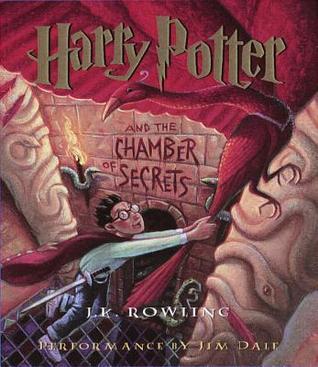
Harry Potter and the Chamber of Secrets Audiobook Review: A Delightful and Compelling Journey

Harry Potter and the Chamber of Secrets by J.K. Rowling

Narrated by: Jim Dale

Published: December 1, 1999 by Listening Library

Buy this book at: Amazon / Barnes & Noble / Kobo

Synopsis:

The Dursleys were so mean that hideous that summer that all Harry Potter wanted was to get back to the Hogwarts School for Witchcraft and Wizardry. But just as he’s packing his bags, Harry receives a warning from a strange, impish creature named Dobby who says that if Harry Potter returns to Hogwarts, disaster will strike.

And strike it does. For in Harry’s second year at Hogwarts, fresh torments and horrors arise, including an outrageously stuck-up new professor, Gilderoy Lockheart, a spirit named Moaning Myrtle who haunts the girls’ bathroom, and the unwanted attentions of Ron Weasley’s younger sister, Ginny.

But each of these seem minor annoyances when the real trouble begins, and someone–or something–starts turning Hogwarts students to stone. Could it be Draco Malfoy, a more poisonous rival than ever? Could it possibly be Hagrid, whose mysterious past is finally told? Or could it be the one everyone at Hogwarts most suspects…Harry Potter himself?

Rating:

Review:

After all my years of reading and listening (and re-reading/re-listening) to the Harry Potter books I have always remembered Chamber of Secrets to be one of my least favorite. Not for any particular reason, but I always remember finding it less compelling than the others. I wonder if my reading habits have changed or my perspective of the book has changed but this was delightful.

A lot of the things that I struggled with in the first book were rectified here. There were less examples of Harry and his friends stepping into situations that they had no logical reason to believe they could solve. But in this book, because it affects Harry so personally it makes a lot more sense that he would see it as a mission to fix it himself. Harry changed a lot in this book. He went from a naive 11 year old who didn’t even know magic existed and was thrown into a situation where people believed that he was hurting people. He even had Hermoine taken away from him for a large portion of the story, who has always been his most sympathetic ear. He was nearly alone and it was a great test for him.

This book also shows us an entirely different kind of Voldemort. We see him as the boy he used to be. We learn that he and Harry shared a lot in common. We see him in the light he wishes to show Harry…the Head Boy, the school hero, the one who stopped the bad guy. It’s not the truth, as we know now, but it’s how he wanted Harry to perceive him. He used this to try and create a kinship with Harry so that he could manipulate him. And it’s just marvelous. Rowling has one of the best talents for adding complexity to her characters. I’ve never encountered an author that is as good at characterization as she is. Everyone is an intricately complex human being. Neither entirely good, nor entirely bad, just like all the rest of us humans. I find it remarkable.

This book also has a lot of little gems that I had forgotten about. This book is really funny. I had forgotten just how humorous it was. Dobby is so earnestly trying to be helpful, and failing so spectacularly, that it’s comical. Lockhart is absolutely hilarious. It is so fun to see some people absolutely hanging on his every word and others rolling their eyes before he even opens his mouth. He is perfectly pompous and it had me rolling out of my chair laughing. Since the rest of the book is so dark and serious it lightened the mood considerably in all the right places.

In the end, I enjoyed this book much more than I ever have before. It feels like sacrilege to say but I think I liked it more than the first book.

Note: You may or may not have noticed that I tried something different with the post title of this one. Let me know what you think. Whether you like it or hate it, I would love the feedback.

Review: The Delicate Beast by Roger Celestin

The Delicate Beast by Roger Celestin

Expected publication: February 4, 2025 by Bellevue Literary Press

Pre-order this book at: Amazon / Barnes & Noble

Synopsis:

A novel of a life built on the ashes of childhood

In the 1950s Tropical Republic, a boy lives amid opulence and privilege, spending days at the beach or in the cool hills above the sweltering capital, enjoying leisurely Sunday lunches around the family compound’s swimming pool. That is, until the reign of The Mortician begins, unleashing unimaginable horrors that bring his childhood idyll to an end. Narrowly escaping the violent fate visited on so many of his fellow citizens, he and his brother follow their parents into exile in the United States where they must start a new life. But as he grows, he never feels at home, and leaves his family to travel across Europe and outrun the ghosts of the past.

A searing novel of a life lived in the shadow of history, The Delicate Beast portrays the persistent, pernicious legacy of political violence.

Rating:

Review:

***Disclaimer: I received a free copy of this book in exchange for an honest review. Thank you Bellevue Literary Press and Edelweiss!***

I began reading this book 64 days ago. I tried to like it. I really really tried to like it. But I just don’t. After reaching the halfway point I decided that I just couldn’t go any further, the writing style was giving me a migraine. In the end this is yet another case of the synopsis selling me a completely different book than the one I read.

The synopsis told me that I would be reading a rich story, set in a lush tropical environment and watching a boy’s life crumble around him in the anarchy of political violence. And then I would be watching as his family picked up the pieces and started a new life. That could very well be what the last 214 pages are about, but the first 200 pages definitely were not. The entire first half is filled with vague stories about the history of this boy, his family, the Tropical Republic, and the townspeople. At first it was interesting and it felt like good worldbuilding. But after awhile I wondered when we were going to get to the point. Ultimately, we never did. When I left off we were just barely seeing the beginning of The Mortician’s reign. I think. Because of the writing style I’m not entirely sure that’s what was happened, but more on that in a minute. All we had read was some vague paragraphs about militias and people being beaten or arrested. I have no idea what happened apart from that. Was this a coup of some sort? A military takeover? An election gone wrong? I have no idea because the author was too busy telling me, yet another, story about the boy going to confession to confess about watching the maids bathing naked.

This was a wordy book. At 414 pages I knew it would be a long book, but it is WORDY. There’s so many words. Superfluous words. Unnecessary words. Words that were so vaguely conveyed that they no longer had meaning, Words that were used in such odd ways that I wasn’t sure that they were being used correctly. This author lives in purple prose. I am not sure he wrote anything but purple prose in the entire 200 pages that I read. Except that typically purple prose displays excessive emotion and is often melodramatic. This book was neither of those things. Just incredibly, pedantically wordy. The emotion and explanation displayed was more in line with beige prose, except for the excessive wordiness that is typically absent in examples of beige prose. It was quite strange, I find that I can’t quite describe it accurately.

Now, imagine the excessive and emotionless wordiness of the book. And then imagine that the topic changes every 3-4 sentences. Different characters, different timelines, different situations, different stories. Rarely was a single topic followed for more than a paragraph or two. The writing was already difficult to decipher, but then I couldn’t figure out who, what, where, or when we were talking about either. I didn’t even realize that The Mortician had arrived for about 10 pages, because we just changed the topic so frequently.

The writing style also didn’t help this book. It was written from an omniscient point of view. We do not venture into the heads or emotions of any of the characters, we remain zoomed out and watching the scene like a movie. The problem with this is that it made it difficult to connect with any of the characters. Because they were explored with such little depth I didn’t care about any of them. They also don’t have names. The Mortician is the closest thing we got to a name in the whole book. All of the characters are “the boy”, “the grandfather”, “the fortunate son”, “the eldest daughter”, “the young aunt”, etc. It was emotionless. These were not real people that I was reading about. They were cardboard cutouts of characters. They had no emotion, no depth, no story, and were completely irrelevant.

I end this review disappointed. Based on the synopsis there was so much promise in this story. I just couldn’t wait to find any longer.

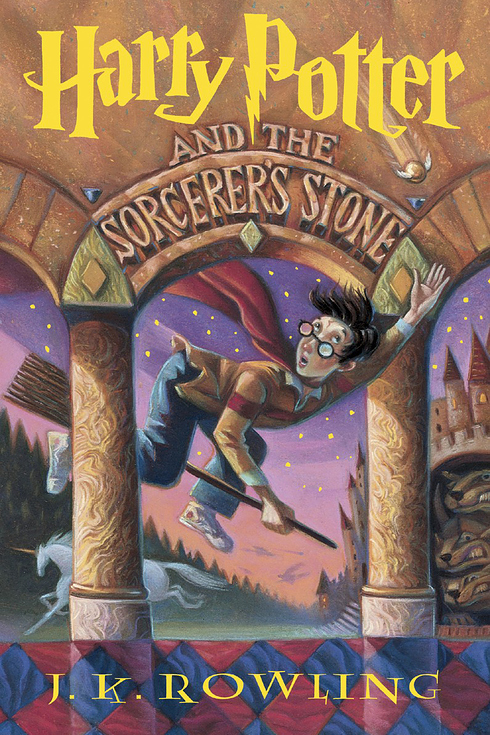
Audiobook review: Harry Potter and the Sorceror’s Stone by JK Rowling

Harry Potter and the Sorcerer’s Stone by J.K. Rowling

Narrated by: Jim Dale

Published: June 26, 1997 by Scholastic

Buy this book at: Amazon / Barnes & Noble / Kobo

Synopsis:

Harry Potter has no idea how famous he is. That’s because he’s being raised by his miserable aunt and uncle who are terrified Harry will learn that he’s really a wizard, just as his parents were. But everything changes when Harry is summoned to attend an infamous school for wizards, and he begins to discover some clues about his illustrious birthright. From the surprising way he is greeted by a lovable giant, to the unique curriculum and colorful faculty at his unusual school, Harry finds himself drawn deep inside a mystical world he never knew existed and closer to his own noble destiny.

Rating:

Review:

I have always loved the Harry Potter books. I was first introduced to them about six months after Prisoner of Azkaban was released. And I devoured them. I was the crazy person who signed up for all of the midnight releases of the new books. Got locked into the Barnes & Noble to await the book being delivered, got my book at midnight and went home to start reading. Once I was an adult I would take the following day off work to read the book in one sitting. I couldn’t get enough. I saw every film on release day. I bought every audiobook on release day. For a long time when I worked a data entry job I would listen to the audiobooks on repeat. I would get to the end and start again, over and over and over. So this was a comfort listen for me.

As far as the narration goes, what more do I need to say other than Jim Dale. Disclaimer, I also love the audiobooks by Stephen Fry because he is a legend and I adore his version. But there’s just something special about the Jim Dale audiobooks. He puts on such a performance! All of the voices and the inflection and the emotion. He is a legend. I could listen to these audiobooks every single day and never get bored of hearing his voice.

Enough of my fawning over Jim Dale, on to the book. It was just as book as I remembered it. One of the most memorable opening sentences in all of fiction, ““Mr. and Mrs. Dursley of number four, Privet Drive, were proud to say that they were perfectly normal, thank you very much.” This single line puts you into this world immediately. You know exactly what kind of people the Dursley’s are. And then you have the wonder of all the “strange” and “unusual” thing that Vernon Dursley keeps noticing, but doesn’t say anything to Petunia because he wouldn’t want to worry her. The moment Harry Potter learns he is a wizard is a moment filled with so much emotion that it still makes me tear up.

Naturally the book isn’t perfect, but it’s close. You have to suspend reality a lot for this plot to be plausible. Why a group of 11 year old children, who had been learning magic for about 5 minutes, thought that they were more capable of protecting the stone than a group of wizards and witches that had more magical experience in their pinky finger? Realizing that if Harry had just left well enough alone that Voldemort wouldn’t have stood a chance at getting the stone in the first place, so he put his friends in danger entirely unnecessarily. And, of course, the royal screw job that Dumbledore gives Slytherin for the House Cup at the end of the book.

But, if you just suspend your imagination a little then these are merely things to giggle about in an otherwise legendary book. The only place where this book loses a star for me is that is it full of tropes. The nerdy, unattractive girl. The fat boy who resembles a pig. The shabby kid who comes from a large family and doesn’t dress well. A lot of tropes that make me crinkle my nose a bit as an adult. But it is just as magical reading it for the thousandth time as it was the first.

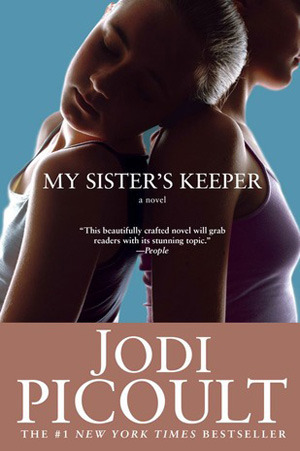
Audiobook review: My Sister’s Keeper by Jodi Picoult

My Sister’s Keeper by Jodi Picoult

Narrated by: Richard Poe, Julia Gibson, Barbara McCullough and others

Published: March 29, 2016 by Simon & Schuster Audio

Buy this book at: Amazon / Barnes & Noble / Kobo

Synopsis:

Anna is not sick, but she might as well be. By age thirteen, she has undergone countless surgeries, transfusions, and shots so that her older sister, Kate, can somehow fight the leukemia that has plagued her since childhood. The product of preimplantation genetic diagnosis, Anna was conceived as a bone marrow match for Kate — a life and a role that she has never challenged… until now. Like most teenagers, Anna is beginning to question who she truly is. But unlike most teenagers, she has always been defined in terms of her sister—and so Anna makes a decision that for most would be unthinkable, a decision that will tear her family apart and have perhaps fatal consequences for the sister she loves.

A provocative novel that raises some important ethical issues, My Sister’s Keeper is the story of one family’s struggle for survival at all human costs and a stunning parable for all time.

Rating:

Review: Spoiler alert: This book irritated me, so I doubt that I will be able to discuss it without spoilers. Consider this your warning.

From the audiobook side, this was very well done. The narrators were very good. I always enjoy having a full voice cast on an audiobook. It makes the audiobook much more of a performance, which I find a wonderful experience. I am very pleased that a lot of audiobooks are moving in the direction of a full voice cast and I hope that’s a continuing trend.

I gave this book two stars mainly because of the moral issues and dilemmas that it discusses. I found the concept of the book fascinating. What would any of us do in the face of our child’s inevitable death? To what lengths would we go to save them? In this book, the parents decide to conceive a child through in-vitro fertilization. But they implant an embryo that is genetically match to their sick child. They have the best of intentions, they are only going to give their sick daughter an umbilical cord blood transfusion, which the new baby doesn’t need anyway. And it works for awhile. Kate goes into remission. But, then she doesn’t. And all of a sudden, it starts becoming reasonable to have your young daughter donate other things. Blood, plasma, bone marrow. The story kicks off when Anna is expected to donate a kidney to her sister, and she doesn’t want to. So she goes to a lawyer and asks if she can sue her parents for the right to make this decision on her own. As she points out, as a child, no one ever bothered to ask what she wanted.

This book had so much wonderful potential! The very issues of bodily autonomy, parental decision making, bodily consent are highlighted on every page. The problem is that the only sympathetic people in this book are Anna and Kate. Their parents are awful, horrendous people. I thought they would be sympathetic people who felt desperate to do the right thing. Instead I found horrendous abusers who berate their healthy children because they have the audacity to be healthy. For example, when Anna isn’t allowed to play hockey because practice would interfere with her ability to donate plasma to her sister. When Anna wants to go to a summer camp, she is berated for even asking. At one point her mother screams at her “Your organs need to be here for Kate, not off at camp!” Wow. Just wow. You’ve entirely reduced your child’s existence down to being body parts that need to be available to someone else. I wanted to vomit. These people were awful.

The ending of the book was similarly terrible. It felt like the author lost her nerve. She didn’t want to make a hard decision so she just opted out of making any decision at all. At the end of the book, Anna confesses that she actually wanted to donate her kidney to Kate. But Kate asked her to refuse, because Kate is ready to die. Kate doesn’t want to keep living like this. That part was ok. It made the book less compelling than Anna wanting to fight for her autonomy, but I was willing to go with it.

Then, it all goes to hell. Anna wins her case. She is awarded autonomy to make her medical decisions, and her attorney is appointed as her POA to sign all the paperwork for her and do the official things that she is too young to do. Anna decides that she is going to donate her kidney after all, if Kate will accept it. And on the way to the hospital to see Kate, Anna is killed in a car accident. And the book happily recounts how Anna ended up donating her kidney to Kate in the end after all. What a letdown. While I had no sympathy for the parents, I had a lot of sympathy for Anna and Kate. They were both in an impossible situation and I wanted to see how it ended. But it didn’t end. Anna wins a pointless victory, and ends up being a kidney donor anyway…..well, that happened.

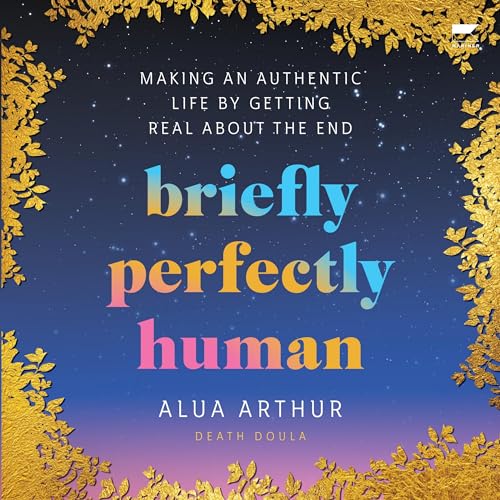
Audiobook review: Briefly Perfectly Human by Alua Arthur

Briefly Perfectly Human by Alua Arthur

Narrated by: Alua Arthur

Published: April 16, 2024 by Blackstone Publishing

Buy this audiobook at: Audible / Kobo

Synopsis:

For her clients and everyone who has been inspired by her humanity, Alua Arthur is a friend at the end of the world. As our country’s leading death doula, she’s spreading a transformative message: thinking about your death—whether imminent or not—will breathe wild, new potential into your life.

Warm, generous, and funny AF, Alua supports and helps manage end-of-life care on many levels. The business matters, medical directives, memorial planning; but also honoring the quiet moments, when monitors are beeping and loved ones have stepped out to get some air—or maybe not shown up at all—and her clients become deeply contemplative and want to talk. Aching, unfinished business often emerges. Alua has been present for thousands of these sacred moments—when regrets, fears, secret joys, hidden affairs, and dim realities are finally said aloud. When this happens, Alua focuses her attention at the pulsing center of her clients’ anguish and creates space for them, and sometimes their loved ones, to find peace.

This has had a profound effect on Alua, who was already no stranger to death’s periphery. Her family fled a murderous coup d’état in Ghana in the 1980s. She has suffered major, debilitating depressions. And her dear friend and brother-in-law died of lymphoma. Advocating for him in his final months is what led Alua to her life’s calling. She knows firsthand the power of bearing witness and telling the truth about life’s painful complexities, because they do not disappear when you look the other way. They wait for you.

Briefly Perfectly Human is a life-changing, soul-gathering debut, by a writer whose empathy, tenderness, and wisdom shimmers on the page. Alua Arthur combines intimate storytelling with a passionate appeal for loving, courageous end-of-life care—what she calls “death embrace.” Hers is a powerful testament to getting in touch with something deeper in our lives, by embracing the fact of our own mortality. “Hold that truth in your mind,” Alua says, “and wondrous things will begin to grow around it.”

Rating:

Review: **Spoiler alert** Since this is a memoir style book, I cant give an adequate review without talking intricately about the plot. Therefore, the review will likely spoil portions of the book.

This book is one of those times that I feel like the synopsis sold me a completely different book than the book I received. What I expected was a memoir that had a heavy focus on what she had learned in her work with the dying and lessons that she had hoped to pass on. But that isn’t the book I read. Alua’s work as a death doula isn’t really covered until the very end of the book and almost none of it was in any sufficient detail to take away a lesson from it. Most of the stories were about how the client’s situation impacted her. Which, as a doula, is not supposed to be the focus. Hopefully this is just because it is her perspective of the story and she comes across to her clients as centered on them and their needs.

I’m also not sure it was the right decision for the author to narrate the book herself. Audiobook narration is a specific skillset and not everyone has it, not everyone is able to convey the story accurately and truthfully while also making it compelling for the listener. That is where this one failed. This work is supposed to be Alua’s passion. Her life mission. But I heard none of that passion in her narration. Her tone was quite monotone and slow, which made it easy for me to tune out and stop paying attention because it didn’t compel my attention.

A large portion of this book is also devoted to Alua’s experience as a black Ghanaian woman. Naturally this made race and racism a big theme in the book. But in some of the circumstances it was difficult to have sympathy for her. For example, when she arrives at a client’s home and is told by the client’s sons that “Sorry, we should have told you that our dad is a little racist”. Now, there is no excuse for the sons actions. They knew damn well that Alua was a black woman. They knew full well that their dad was a racist. So it was entirely abhorrent that they tried to hire her at all. If she had rejected the job and gone back home every single person reading would have cheered. But she decided to stay. Only to help the sons, not interact with their dad. They agreed. And then they pushed her to help their dad. Again, abhorrent behavior on their part. Every single person reading would have supported her in walking away immediately and going home. No one should subject themselves to racism and hatred directed at them. Never for a moment.

But again, she decides to stay and interact with the father and participate in his care. A decision that I thought displayed a level of empathy and compassion that I could never understand. Then, as she is sitting at this dying man’s bedside she is privately thinking about how she wishes that he is suffering, wishes that they wouldn’t give him pain medication so that he would die miserable. Relishing the idea that he would die with his last image being a black woman. My eyebrows raised almost off my head. Clearly she was unable to provide the client compassionate or empathetic care. She could not remain neutral. And I don’t blame her, I doubt anyone could. And they shouldn’t have to, let me be clear. But she had numerous opportunities to remove herself from the abhorrent situation and decline to work with them. She chose not to and then told us the story of wishing this dying man would be in more pain. That is gross. If she couldn’t give the family the same service she gives others then she shouldn’t have been there. Then she sums it up with it being “another situation where I diminished myself as a black woman for the comfort of white folks.” I feel like that was the wrong lesson. The real lesson should have been that she needed to advocate for herself as hard and passionately as she advocates for her clients.

Often time the stories that the author tells focus on her efforts to help the dying client “die with grace”. While this is a nice ideal, it often isn’t a reality. And it seems like an unreasonable burden to put on a dying person, to have grace. It feels like the expectation is performative. Die with grace so that all of your family can have a nice experience. I didn’t like it. It made me feel uncomfortable.

Overall, I don’t think this book was for me. I was expecting something completely different and I didn’t enjoy what I got.

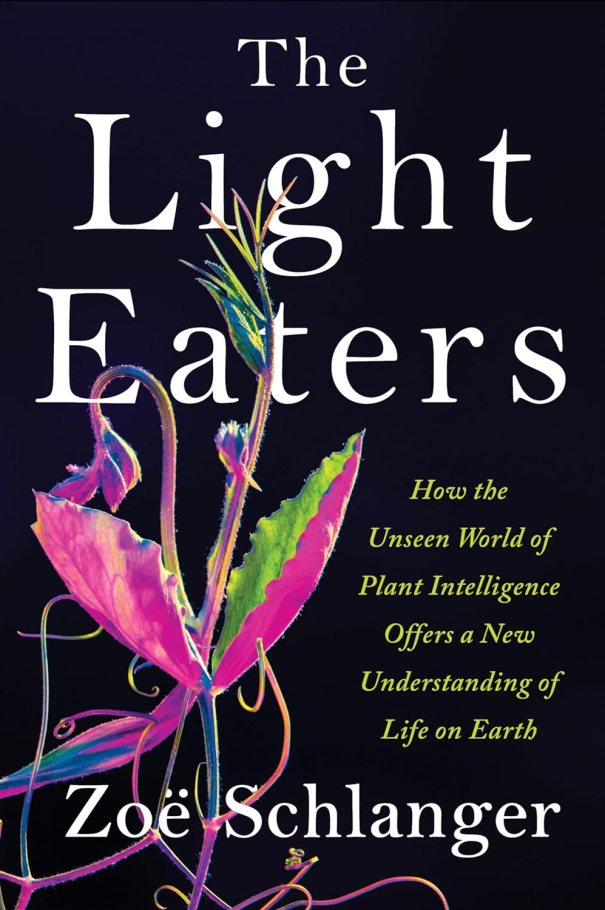
Review: The Light Eaters by Zoe Schlanger

The Light Eaters by Zoe Schlanger

Published: May 7, 2024 by Harper

Buy this book at: Amazon / Barnes & Noble / Kobo

Synopsis:

Award-winning environment and science reporter Zoë Schlanger delivers a groundbreaking work of popular science that probes the hidden world of the plant kingdom and reveals the astonishing capabilities of the green life all around us. It takes tremendous biological creativity to be a plant. To survive and thrive while rooted in a single spot, plants have adapted ingenious methods of survival. In recent years, scientists have learned about their ability to communicate, recognize their kin and behave socially, hear sounds, morph their bodies to blend into their surroundings, store useful memories that inform their life cycle, and trick animals into behaving to their benefit, to name just a few remarkable talents.

The Light Eaters is a deep immersion into the drama of green life and the complexity of this wild and awe-inspiring world that challenges our very understanding of agency, consciousness, and intelligence. In looking closely, we see that plants, rather than imitate human intelligence, have perhaps formed a parallel system. What is intelligent life if not a vine that grows leaves to blend into the shrub on which it climbs, a flower that shapes its bloom to fit exactly the beak of its pollinator, a pea seedling that can hear water flowing and make its way toward it? Zoë Schlanger takes us across the globe, digging into her own memories and into the soil with the scientists who have spent their waking days studying these amazing entities up close.

What can we learn about life on Earth from the living things that thrive, adapt, consume, and accommodate simultaneously? More important, what do we owe these life forms once we come to understand their rich and varied abilities? Examining the latest epiphanies in botanical research, Schlanger spotlights the intellectual struggles among the researchers conceiving a wholly new view of their subject, offering a glimpse of a field in turmoil as plant scientists debate the tenets of ongoing discoveries and how they influence our understanding of what a plant is.

We need plants to survive. But what do they need us for—if at all? An eye-opening and informative look at the ecosystem we live in, this book challenges us to rethink the role of plants—and our own place—in the natural world.

Rating:

Review:

I simply cannot say enough good things about this book. It was thought provoking, compelling, evocative, and also easily digestible. The book centers on the author who has spent her career reporting on environmental science and climate change. She was depressed about it. It was causing her to feel an existential dread and pessimism abut the world. So, she started reading botany publications. And she uncovered that the world of botany is booming with amazing discoveries. The botany world is exploding with all the new things that they are learning about plants, and also coping with how (if at all) it should change our overall worldview. This book comes from that starting point.

When I went into this book I didn’t know quite what to expect. A few years ago I read a book about fungi and was astounded at how complex fungi are and how little I knew about them. I feel a similar way after this book about plants. We all know the basics of how plants came into existence. Millions of years ago when the world still existed as basic multicellular organisms floating in a vast ocean, the atmosphere was a toxic blend of chemical that would not support any kind of life. In that environment the first plants found themselves on shore and did the most amazing thing. They inhaled all of the toxic chemicals in the air and excreted oxygen. As more plants emerged from the ocean this slowly started making the air more breathable. By the time the first animal creature crawled out of the ocean, the plants had already been evolving, living, adapting, and reproducing for 125 million years. They were now so vastly different than anything that would evolve later. And animals were perfectly suited to breath the oxygen being excreted by plants and exhaled it as carbon dioxide…which plants could consume and the cycle of life would advance.

This author tried very hard to not use human terminology when referencing what plants could do, but at a certain point…..what’s the use in trying? Words have meaning. We use words to identify things in our environment. So while scientists bristle at using words like “intelligence” or “behavior” with regard to plants, how else do you describe the behaviors that they witness? The book covers in detail the amazing things we’ve learned about plants, and also details the scientific resistance along the way. As Zoe Schlanger says:

“But science’s biggest flaw and biggest virtue is that it almost always mistakes agreement for truth.”

Scientists agree that plants aren’t intelligent and can’t communicate, so that must be the truth. But what else do you call it? When you discover that plants communicate with other plants in the vicinity that a pest has arrived, and the other plants respond by turning on their pest defense systems. What else could that be called if not communication? When plants are growing next to genetically related plants they will grow in ways that share resources equally but when growing next to unrelated plants will compete for the resources. What else could you call that except intelligence?

I have a million things to say about this book and I couldn’t recommend it more. In the end, I came away with this realization: Intelligence and sentience are an inherent part of existing. Every single individual cell that makes up the world shows the ability to recognize itself and other, shows the ability to avoid things that injure them, shows the ability to seek out resources to preserve themselves. I am starting to believe that the entire world is sentient. The entire world is intelligent. All of us, down to a single cell, are connected in ways that have been evolving for hundreds of millions of years. None of us can survive without the others. It is just a fact that humans are very bad at recognizing any kind of intelligence that doesn’t mirror our own. But just because it doesn’t look like something we recognize doesn’t mean it’s not intelligence.

Audiobook review: Brave New World: A BBC Radio Dramatization

Brave New World by Aldous Huxley

Audiobook by BBC Radio 4

Published: October 11, 2016 by BBC Worldwide

Check this audiobook out at: Audible

Synopsis:

A gripping BBC Radio 4 full-cast dramatisation of Aldous Huxley’s classic dystopian novel.

It’s 2116, and Bernard Marx and Helmholtz Watson are token rebels in an irretrievably corrupted society where promiscuity is the norm, eugenics a respectable science, and morality turned upside down. There is no poverty, crime or sickness – but no creativity, art or culture either. Human beings are merely docile citizens: divided into castes, brainwashed and controlled by the state and dependent on the drug soma for superficial gratification.

Into this sterile society comes an outsider, John – a man born into squalor and suffering, but raised on The Complete Works of William Shakespeare, a book which has shaped his entire life. When he discovers that treasured ideals such as love mean nothing in this ‘brave new world’, where romance is ridiculous, marriage shocking and parenthood shameful, John’s world is shattered – and his reaction will show Bernard and Helmholtz what rebellion really means….

Based on Aldous Huxley’s 1932 masterpiece, widely considered one of the greatest novels of all time, this chilling dramatisation set in a futuristic totalitarian society stars Jonathan Coy, Justin Salinger, Milton Lopes and Anton Lesser. 

Rating:

Review:

I am a huge fan of Brave New World by Aldous Huxley. I have read the novel at least 10 times. I find it incredibly relevant to society today. I quote it more often than I should, I compare news stories to it far more often than I ever thought I would. It is truly a masterpiece of fiction. So, when I was contemplating having another listen to Brave New World, I stumbled across this audiobook. This was broadcast on BBC Radio 4 back in 2016. It features a full voice cast and is a dramatization of the novel.

Overall it was marvelous. They took all of the compelling and interesting pieces of the novel and displayed them in a new way. It was reminiscent of the days of Mystery Theater (although I know that radio dramas long preceded that particular program). I love listening to radio dramas. I find them interesting and compelling in ways that reading a book wouldn’t be, and you are forced to focus on the words much more than an in-person dramatic performance. It’s perfect for someone like me.

The voice actors did a masterful job. The story was told with passion and fire and it was everything I hoped it would be. Don’t listen to this if you aren’t familiar with the novel however. It is a dramatization, so it doesn’t tell you the full story. If I wasn’t so well acquainted with the story then I would have been confused on what was going on. I did have some mild confusion because several of the voice actors perform several different roles. Because the voices were similar, I sometimes would be confused on which character was speaking. At least for a minute until I recognized the line and recalled who said it.

If you love Brave New World then I highly recommend this piece. It’s only two hours in length, can be done in an afternoon. It is truly wonderful.